

Choice is a word we bandy about a lot in modern times, especially in catchy little “thought-leader” quotes on social media. Over the weekend, someone posted this little nugget of wisdom:
Some uncomfortable math:
Your bank account is a record of your decisions
Your body is a record of your habits
Your relationships are a record of your priorities
None of this is luck. All of this is compounding.
Social Media Know-It-All I Shan’t Name
IMO, this post isn’t about “uncomfortable math,” it’s moral laundering. Decisions don’t exist in a vacuum. Systems, illness, caretaking, instability and plain bad frigging luck all shape the ledger. This is true in life, but even more true in fiction.
See, the weird thing about choice, is it is an inherently human conundrum. Unlike animals guided solely by instinct, we humans possess the concept of a “self.”
We have an ego or id or whatever it is that makes us apex drama queens. It is that conscious self that permits self-reflection, which I am a huge fan of…so long as we at least flirt with a little bit of reality.
Life is not binary or clearly marked with signage.
I get why folks post these passive-aggressive snipes labeled “life lessons.” With a surface read, they feel true.
It’s easy to get folks clapping like seals, heads bobbing as if they’ve ever faced a binary world in their lives. Life is virtually never a choice between one terrible, stupid, reckless option versus the sane, level-headed, adult one.
I’d even venture to say that 99% of life is choosing the least crappy decision out of a list of horrible options while gambling the fallout is something we can handle.
Ideally later.
If LIFE is life like this, and fiction is really LIFE in distillate, what kind of choice are you offering your characters?
NO Choice

If you want to know how professional writers turn out a book or two or ten a year? Whether they’re a plotter, pantser or something in between, they understand story structure.
Deeply.
If we pan back and look at what great storytelling is, it is all about choice. And our characters must have agency. Pretty words alone are not enough. No reader is solely there for our decision to use “cerulean” instead of “blue”. They want a story with stakes.
Big ones.
If our characters keep going from thing to thing and place to place out of no volition of their own? They’re not a character. They’re flotsam. Maybe jetsam. Depends on whether we threw our character overboard or churned them up from the sea bed.
What choice did your character make to get where they are?
Choices are Rarely Obvious or Simple

If this is true in life, then why the hell are we holding the reader’s hands and taking away the very reason they want to read fiction?
First, let’s pause a brief minute and ponder a half a minute as to why anyone, in a world with TikTok and Netflix, would want to read your book? Or mine? Reading is hard, brain intensive and requires focused concentration.
So why are people reading?
For the same reason we hop on roller coasters. We want a safe place for catharsis. To teeter at the edge of the abyss…while strapped in safely in a seat that’s passed nine hundred separate inspections. Yet, don’t we also forget that while we are on the ride believing we’ll surely DIE?
Our audience already understands how life works because—DUH—they’re living one. They also smell bull sprinkles from a mile away. Sure, maybe there are some genres where there is a bit more coddling. I’m not going to pretend that The Baby-Sitters Club has anything remotely in common with Cormac McCarthy’s Blood Meridian as far as genre and tone. But what do they both actually share?
CHOICES.
Sticky ones.
If I can give y’all any writing advice at all, it’s this. Learn to be hard on your characters. Then get harder and meaner. Hurl everything they believe they love through the metaphorical wood chipper, or (like Fargo) an actual one.
Choice should never be binary, A or B? It needs to be A, B, C left town, D is shacking up with Q, and S wants child support for X, Y & Z.
Life and Fiction is About Sticky Compromise
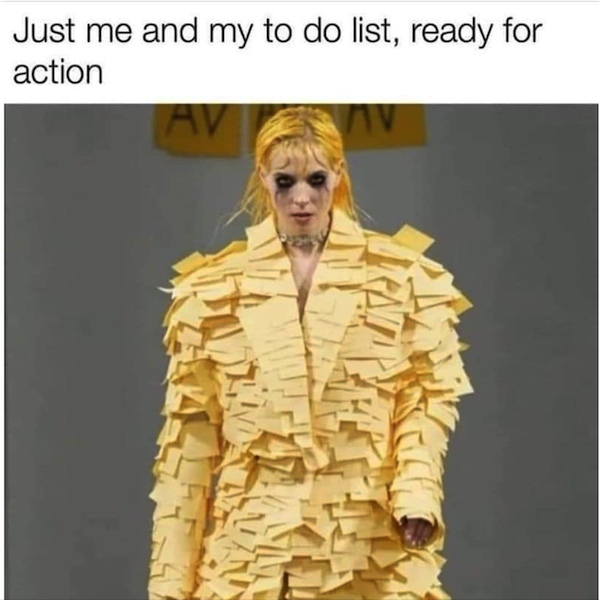
How many times in life do we get a break? Really? As in real, breathing people? Life is just one decision after another and that has only gotten exponentially worse in the Information Age.
We actually now have a word for the crappy way we feel at the end of the day, when we will happily eat cereal for dinner because we’re cooked (well done, of course).
Decision fatigue.
Do you think people get decision fatigue because life is a pretty path of petals?
Send the email now or wait and hope for better options? Fix the AC or get a new washer and dryer? Tell your partner you love them but also if they don’t stop snoring you might have to find an awesome expensive defense attorney?
Nothing easy.
Ever.
And that is life, not fiction. In stories the problems are grand, stakes are massive, failure is not an option.
In life, problems are grand, stakes are massive, and we experience actual failure all the frigging time. We don’t find true love, land the dream job, take out the evil HR Empire. This is why we read fiction. Messy but with a satisfactory ending…not some fresh toke on a fire hose.
Enjoy the RIDE!

With rollercoasters, have all the twists and turns you want, but design must play along with the laws of physics or things go terribly wrong.
Same in stories.
Additionally, just like rides have a clear beginning and clear destination, so should our stories. It’s the how we take the rider reader from beginning to the end that makes all the difference.
Which is weird because most of the time, we know how stories will end, don’t we? Well, kind of. We know the good guys will likely win, just aren’t exactly sure how. And that is what makes us tense, where we storytellers can strip away control.
How many of you sat at the edge of your seats when Frodo and Samwise finally stepped into Mordor? Did you worry when the spider tried to make Frodo into a snack? Wonder if Samwise would get there in time? I mean actually worry?
No.
WHY?
We “worried”, sure. Yet we all knew on some level they’d be successful (unlike life). If Tolkien had just let everyone fail pointlessly to illustrate some existential morass…we’d have Russian Lit. If they made that into a movie—once the reader revolts subsided—we wouldn’t have one of the most iconic movies of the modern age.
We’d have a French film.
And everyone died. The end.
Yet, somehow Tolkien threaded between Dostoevsky and Sundance’s latest rave and gave audiences movies they never tire of rewatching even though we all know the Ring is destroyed. How did Tolkien/Peter Jackson manage this tension?
Choice.
Or rather, the illusion of having one.
See this is where choices—particularly messy choices—make the difference. Once our story starts becoming predictable, we leave a nice convenient place to put a bookmark.
In our business, BOOKMARKS=DEATH.
Never, ever leave a logical place to stop reading your stories. The only acceptable place to leave your story needs to be at the end, when the reader is giddy, breathless, shaken and can’t wait to do it again.
Now Use Your AI

Obviously, this is a personal decision. Once you have your log-line (your story in ONE sentence), feel free to riff from there. Though I, personally, don’t like outlining every detail of my story, I do begin with at least a general idea where I’m going.
This starts truncating choices from there into an increasingly narrower decision tree.
We let the reader “know” a vague idea of how our story ends (true love, happily for now, business saved, family restored, babysitter club in tact, justice served); we just don’t explain how we intend on getting them there.
Every scene begins with a GOAL (external or internal). In the scene, there are three options: win, lose, draw.
Our MC should get hammered most of the book (mostly lose and draw with a rare win), but this is where we need to be careful. This is where sticky choices can help. Messy “good enough considering” choices keep our characters out of The Land of Too Stupid to Live.
Instead of obvious good and bad choices, we should mirror life, then amplify the hell out of it.
AI can actually be an excellent soundboard. When your MC hits a choke (choice) point, what is the obvious good decision? Now scrap that. Also the obvious bad one. Brainstorm until you drill down into maybe the MC’s third or tenth choice.
If we get the reader’s the adrenaline pumping, that’s awesome because stress narrows focus. They might “see” the first couple sane options but if we dig down and serve up the less obvious? It won’t make sense until after the ride is over.
And retrospectively, they’ll see it wasn’t merely brilliant but inevitable, which is why they’ll tell all their friends and preorder our next book.
Stories Have a Clear Finish Line (Ending)

So does life, but that is beyond the scope of this blog. I want y’all to imagine your reader. Then answer WHY your book? Why spend limited money and time they don’t believe they have to engage in an activity most people rate alongside doing their taxes?
Most people don’t read because they believe reading is boring. But, for those who do read or who will read…WHY?
We have desires that may or may not come to fruition in life. Stories offer a place where the underdog wins, right and wrong matter, characters defy all the odds and WIN. Stories give us respite from reality long enough to reignite what makes us utterly human.
Belief.
What Are Your Thoughts?
I LOVE hearing from you!
What choice in your story scares you to make, and why?
Where in your current project is your character avoiding the hardest decision, even though it’s the one that would change everything?
Have you ever realized mid-draft that your character had no real agency—just motion? If so, what did you change to fix it?
What’s the messiest, least satisfying choice you’ve forced a character to make, and how did it affect the story?
Have you ever used AI to brainstorm story decisions or turning points? Did it help you uncover a less obvious option you hadn’t considered?


12 comments
1 pings
Skip to comment form
I think it’s interesting how often the “AI is inevitable, you may as well just use it” argument is coming up. No one is denying the environmental cost, or the pie in the sky arithmetic the companies are using to pretend they have a plan for profitability. It’s just “It’s here, it’s not going away, use it or miss out.” You know, the same thing they said about NFTs.
Anyway, I see the appeal in getting AI to try and break a stalemate if you can’t figure out how to break your own story, especially if you’re looking for vanilla solutions to reject. AI is trained on what’s already been done. That’s ALL it knows. It can’t create anything new. It can only re-package the old, and the longer it goes on, the more it gets fed its own waste product, and the results will reflect that. Much as I’d hesitate to tell other people how to write (If I knew the answers, I’d be rich and famous already) I can’t support using AI, even in this small way. It’s not the same as using a word processor, or a dictaphone, or any other kind of technological advance. They helped with the practicalities of writing, not the mechanics. Even if they weren’t causing such environmental destruction, even if they weren’t being used as an excuse to fire thousands of artists and writers,even if they didn’t “hallucinate” and cause actual deaths, humans don’t NEED them to write wonderful stories. And if you use them to do that, you’re going to get average stories, built by averaging data from stolen works.
Author
You aren’t wrong. I resisted for a long time and actually still do. I haven’t been blogging the past year because I was doing a post grad in AI/ML at UT Austin. I wanted to understand exactly what writers were up against and you are dead right.
The degree didn’t make me feel better. BUT I do have at least a grasp of enemy terrain. I took the time to get the degree so I could help mitigate the hype.
AI shouldn’t write for us and often, yes it gives crappy suggestions. That said, sometimes we need out of our own head. I have found if I get stuck, I can ask AI for suggestions. Usually they DO suck, but it is enough brainstorming momentum to get my brain thinking of WAY BETTER STUFF on my own.
It has also cut down on editing time. For instance, NOTHING IN THIS POST IS AI. All my writing is my own, typos and all.
However, I was able to just free write this blog long form, then paste in and ask if there were areas I was being redundant or that I could condense. What once took a couple hours took 30 minutes. I don’t let it do any of the work for me, but it can be a fantastic seeing eye dog.
That said, DO NOT RELY ON IT. It still will miss typos, grammar issues, etc.
I am with you in that this technology CANNOT be compared to anything that has come before. The usual arguments are false syllogisms. Yes, we all know the automobile drove the horse and buggy manufacturers out of business…but the automobile created millions of HUMAN JOBS.
AI not the same even a little. I completely respect any author who doesn’t want to use it. That said, there are some limited uses I have found it saves a lot of time. For instance, instead of spending three hours down the Google rabbit hole looking for a term, I can just ASK. No articles to read, no rabbit holes and then BOOM..back to work.
Thank you for such a thoughtful comment. Will be an interesting ride for sure.
Mrs Dim and I have thos discussion a lot. Her boss uses AI to make her emails more concise. And yes, I get that, but she doesn’t learn anything from it, doesn’t change the way she writes. Still it’s good to talk about this and get some different perspectives! As always, your posts are good reading!
Man, I have missed you, girl!
I love this post about choices. And I definitely think we should never let our characters make the easy one unless there are unexpected consequences hiding behind that door.
But, the choice, however far down the alphabet it comes, needs to make sense. The character needs a reason that I will BUY for making that choice. It can’t be random. Otherwise, I might not just bookmark that baby, I might close it and check out the next one on my KU reading list.
Also, I think AI is a great brainstorming partner. I especially LOVE when Claude tells me, “You’re right. If you use (that idea I recommended) it won’t make sense with what has gone before.”
Thanks for studying AI so I don’t have to. I love your Cliffs Notes version.
Author
Oh I HAVE MISSED Y’ALL SOOOO MUCH! AI didn’t seem like something that I could DIY if I really wanted to actually help writers. 2025 was a tough year. Learning to program, code, build LLMs NOT easy, but I am proud of myself for finishing (with a 4.0). I feel a LOT more confident giving advice on this next leg of our adventure!
Thanks so much for taking the time to comment. It means so much and is so encouraging.
Yes! A character’s potential direction makes a reader care, reductions to essence make choices real and distinct, and manifested consequences of choice make the story relatable and its message enduring.
Generating this sort of investment is how we write instead of merely produce.
Author
We gonna have to beat the machines. Thanks for the comment and love that you enjoy my posts. I have read your fiction, so that means a lot.
Great post!
To answer your questions:
Q- What choice in your story scares you to make, and why?
I’m not sure at present, but there was a time that I was scared to make a main character (in a fanfiction novel) do anything to get his love interest. I think I was hampered by the source material, and by my own inability to act in my own life. And I projected this onto my characters, then wondered why I was stuck.
Q- Where in your current project is your character avoiding the hardest decision, even though it’s the one that would change everything?
I don’t know, but this might be an example. My sorcerer main character is in love with a foreign princess that has come to the legendary King Arthur for help keeping Brittany free from King Henry II. But the sorcerer (Merlin) advises King Henry II as well as King Arthur. The princess’ brother then goes and has a tryst with Morgana, leading to a son. The sorcerer must prevent both that brother and the son from reaching the throne before their father dies, and his solution is to make Brittany accept Henry II as overlord; the dying king and his two children will therefore lose sole control of their throne.
That’s what I came up with thus far, and I’m open to advice on any unclear parts, or if the choice isn’t stark enough.
Q- Have you ever realized mid-draft that your character had no real agency—just motion? If so, what did you change to fix it?
I didn’t realise it. Someone else had to tell me. To fix it, I had to ditch loads of chapters and rebuild my main character from scratch.
Q- What’s the messiest, least satisfying choice you’ve forced a character to make, and how did it affect the story?
I don’t know yet.
Q- Have you ever used AI to brainstorm story decisions or turning points? Did it help you uncover a less obvious option you hadn’t considered?
No, I haven’t, and I am not likely to. Even though I have relied heavily upon AI translation when learning Russian in particular, and even though I acknowledge that several AI tools are handy, I still see AI in writing as a tool of mass control, designed to keep us hooked to screens and weaken our capacity for independent thought. That being said, I am weak at devising story decisions and turning points, and this is a fault I am addressing at the moment.
Author
Great and thoughtful answer. And AI is a personal choice, like using Grammarly (only AI is like the Mega Evil version to be handled with serious care). Does this list of questions help act as a litmus?
In my novels, the narrator’s only choices are to go along with or resist the situations he is placed in by the other (always female) characters. He struggles with a few of these, but he always ends up going along because these other characters all have sex with him ????
Author
You do you, boo.
Interesting as usual, Kristen. My current WIP, which started as a short story, then advanced to Novelette, Novella and 150k words later I’m not sure what the hell to do with it. That’s what I get for being a pantser. The choices my main character makes are forced on him by outside influences. A common trope I’m sure. One can hope to keep it interesting and not too dang predictable.
[…] Why Choice—Not Talent—Drives Great Stories by Kristen Lamb […]