

Counterfeit creativity is robbing our species blind. We are sacrificing our souls on the altar of cheap, fast, free and easy, but at what price?
For most of human history, creativity had a cost. A painting required years of training, mistakes, dedication, practice, and courage. Music required months and years of pain, blisters, practice, rehearsal, performance, and courage. A novel required years of reading, learning, grammar, structure, practice, failure, perseverance and courage.
Even mediocre art took effort.
AI changes the creative math.
Now anyone with an internet connection can generate:
- a novel outline
- a painting
- a marketing campaign
- a song
…in seconds.
Which all raises an interesting question.
If something looks creative but required no creative effort, what exactly are we looking at?
Not fraud.
Not plagiarism (exactly).
Something new.
I’d like to introduce what I call counterfeit creativity.
Counterfeit Creativity

Counterfeit money looks real enough to circulate, and counterfeit creativity works the same way. It mimics the appearance of creative work. It seems to have structure, style, aesthetic cues and emotional beats, but the underlying process is fundamentally different.
Authentic creativity comes from struggle, lived experience, experimentation, and failure. Counterfeit creativity is generated through statistical pattern reconstruction. It produces something that looks like creativity without the creative journey behind it.
For now, it seems there are plenty of people left who can sense the AI Uncanny Valley, but that window is closing, and closing FAST.
Many people can’t immediately tell the difference because humans, historically, have judged creativity by output not process. Thus, if something reads like a novel, looks like a painting, or sounds like music our brains classify it as “creative.” But that assumption was originally wired in a world where output and effort were inseparable.
AI just broke that link.
The “Crapification” of Everything

I would love to say this problem happened just with the advent of AI, but end stage capitalism is merely the sterile syringe that delivered the literary lidocaine inuring us to what CRAP looks and sounds like. We are going to zoom in on the writing world, since that’s the water we swim in.
Metacognition isn’t being poisoned by AI. It’s something more primal—dating back to the late 1900s: the fear of being labeled a “f*&king poser.” It’s the harshest epitaph imaginable because it’s a crime of social consequence.
Brian Eisold
Except it’s another relic of capitalism. Writing used to be a creative art—and while capitalism in the form of “best seller lists,” readership metrics, and critical acclaim impacted writing, they served to gatekeep writing as a profession to those who were competent writers. It wasn’t until recently that we “democratized writing” which is a fancy way of saying we made it accessible to everyone, where it went off the rails.
Early on, when I began this blog, I exclusively geared my content toward authors who wanted to traditionally publish. It wasn’t because I believed the Big Six were that special, but I appreciated WHY we might need a world with gatekeepers.
Additionally, though I could see the many benefits that could come with self-publishing and indie publishing, I saw the inherent dangers. How it would let out a genie we’d never get back in the bottle.
The democratization of publishing happened on other fronts as well, though. Remember Huffington Post? Arianna Huffington IMO single-handedly obliterated the print medium and all the writing jobs that once went with it. The exposure dollar economy was the warning shots.
Show up, write your best for us and you can tell the world we pay you great money let you post on OUR site where we make millions using an unpaid workforce. Tell a bunch of writers this will lead to bigger things, they post their BEST and promote it on all their social networks…and with every click we make ad money.
LOADS OF IT.
Pay the Writer
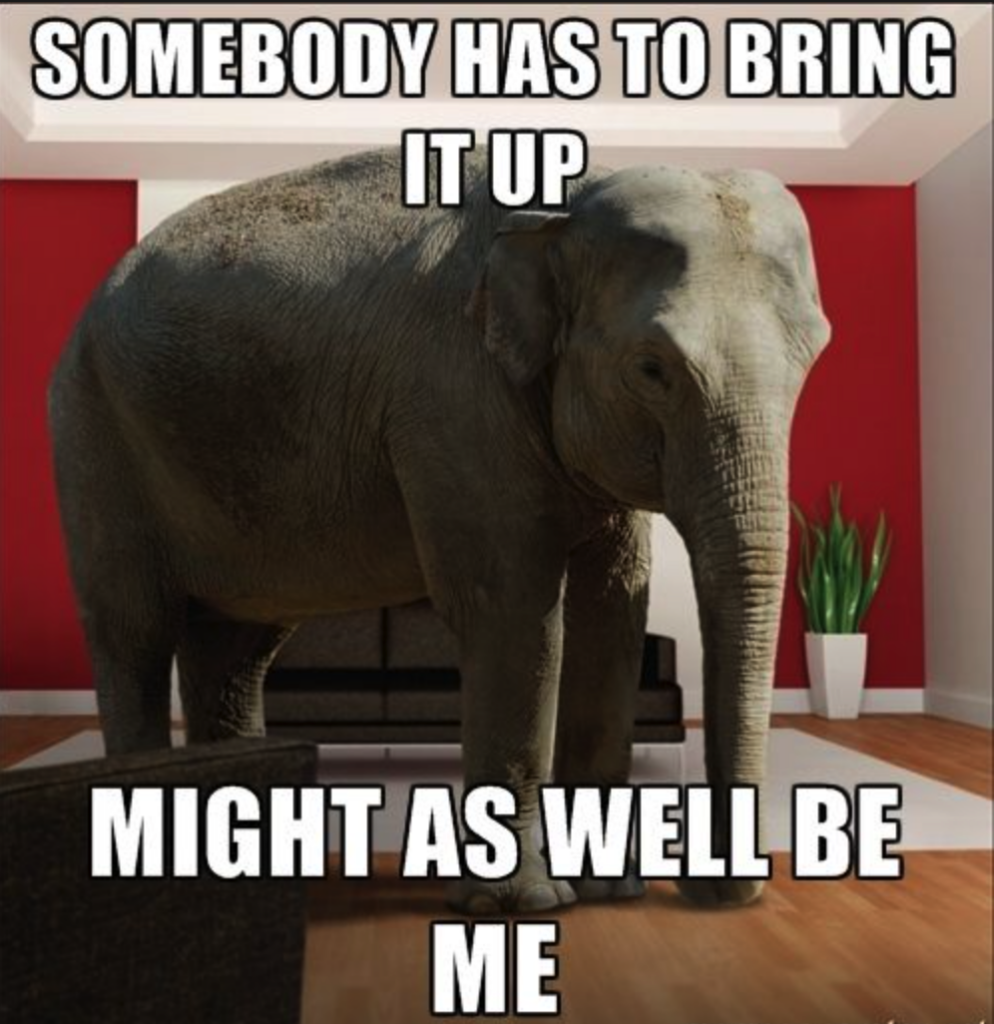
I know when I drop terms like late or end stage capitalism, I risk the eye rolls, but hear me out.
Creatives have always sought to be paid for their work. Yes, it might be au gauche or tawdry, but we don’t care. We spend years mastering something that others derive joy and value from? We should be compensated just like everyone else.
That and we like to eat and the power company doesn’t accept poetry as payment.
In earlier times, creatives had wealthy sponsors. Later, the markets aligned to give ways creative people could be paid/rewarded meaningfully for our hard work and years dedicated to honing a skill. Newspapers, periodicals, dime novels, copy, marketing, ads were all ways creative professionals could make a living while producing the next great work of art the world enjoyed.
Read Stephen King’s On Writing, Steven Pressfield’s War of Art, Robert McKee’s Dialogue and they all share stories of the paid “crappy” gigs these masters took on while working on the “real art.”
Late-stage capitalism describes the point where market incentives inevitably drive everything toward cheaper, faster, and more scalable versions of itself, even when that process strips away the craftsmanship and meaning that once made the product valuable.
Systems no longer optimize for creating value, but for producing the appearance of value as cheaply and quickly as possible. Pay the writer became…use the writer.
Or the musician, songwriter, painter, illustrator, animator, etc.
Tell them they are special, pay them in attention, then up the operational tempo to such a high level that literally no human artist could keep pace (relevant). Meanwhile use all the real art that creatives built to train the synthetic version that you’ll SELL them later when they are so desperate to remain in the loop they’ll audition for their own extinction.
The Art is Fake but the Rot is REAL

The real danger isn’t that AI can generate content, it is that AI is flooding the world with creative-looking artifacts detached from human meaning.
Imagine a future filled with books no human truly wrote, art no human felt, songs no human performed. You know what? Since we are already here, why do we even bother with museums? Expensive to store, insure, restore, preserve. We could just 3-D print some replicas. I mean is anyone REALLY going to be able to TELL if that’s the ACTUAL Mona Lisa?
Y’all can breathe now. I am being sarcastic. But, hopefully I made my point.
My largest concern with AI “art” hasn’t just been the creative professionals it displaces, but what it’s doing to humanity as a whole.
Never underestimate the unique human capacity to get used to some seriously LOW standards. I learned that lesson my first “hamburger day” in a public school lunchroom. Every kid was excited for a slightly greenish hamburger facsimile (some even bought TWO), while I was clutching my foodie pearls. How could they be excited to eat THAT?
Then I was there long enough to sample what the “normal” food was like and it made more sense.
My biggest concern about AI art has always been the impact on the audiences. Even now. We no longer go to the movies. Most are unwatchable. If we DO go to a movie, you know what is a WIN?
It was…watchable.
I used to think the creators of Idiocracy were onto something. Now? I think they might have had a crystal ball, and they also woefully underestimated just how dumb we humans can be.
The #1 movie in America was called “Ass.” And that’s all it was for 90 minutes. It won eight Oscars that year, including best screenplay.
Narrator of Idiocracy
We aren’t going to need to travel thousands of years in the future to grasp that we are hurtling toward a world where all the top shows are some poor dude getting hit in the ‘nads in clever ways (yes, that is a real thing from Idiocracy).
Dealing with Counterfeits

Since the point of my posts are to educate and empower you, what is the answer? The United States Secret Service oversees most of our money/financial crimes. They also go after counterfeiters. Do you think they train years and years on every fake out there and what to look for?
Nope.
They spend years and years understanding AMERICAN CURRENCY. How do the bills feel? They learn how to tell a real c-note with their eyes closed. Because they know the real thing so intimately, they don’t need to concern themselves with the fakes. The fakes practically pop out.
There is a good reason the best writers are also avid readers. Read the excellent works, train, practice, fail, get up, do better and hone those skills. Write excellent stories. I know we are all under a lot of pressure to be content mills that feed the public’s (supposedly) ravenous appetite.
But why are they so famished?
Years and years of increasingly empty creative calories and artificial art.
Not only is it unsatisfying, but it warps the palate.
Take a person used to drinking cheap sodas and eating junk food then try to give them good food. They won’t like it at first because it will taste strange. Layers of artificial ingredients are masking that what’s being served is inedible, empty and possibly toxic and yet people binge on the stuff.
Same with counterfeit creativity. We have a narrow window where there are enough people around to remember what art used to feel like. With all the AI slop in circulation, get to work. Superlative art will rise. Audiences will find it and stick like glue because it resonates with their souls.
Counterfeits are always costly. Counterfeit money can implode a country just as sure as fake art can bankrupt a culture.
This is why it is critical now, more than ever, to cherish real art before we drift into a world that can no longer even recognize it. If we do get to a point that no one can tell between Monopoly money from the real thing, only then will we be out of a job. Until then, we are still in the game.
But I warn y’all… tempus fugit.
We don’t have forever.
What are YOUR thoughts on Counterfeit Creativity?
Other than it goes with counterfeit cleverness? Personally, I am exhausted with all the AI slop. AI cannot create art. Period. It is a tool. The paintbrush doesn’t make the art, the artist does. The keyboard doesn’t make the story, the writer does. And, for me? There is a certain je ne sais quoi missing from AI “creations.”
That said, do you think we could hit a time that humans won’t really recognize art? Or is it too deeply wired in us? If everything “looks real”, who will remember how to tell the difference?
Do you think that removing the human from art could eventually remove humanity from the human? I know we writers love these existential arguments, but I think this is a good one. If all the art is shallow, derivative and superficial, wouldn’t we eventually see a culture that is shallow, derivative and superfi—–
Houston, we have a problem…




14 comments
Skip to comment form
One of your best articles! Real writing is still valuable…especially since AI can’t IMAGINE.
Excellent article. I use AI-generated JPEGs because I can’t find authentic art to portray the fantasies that I write, but when it comes to writing, A.I. is nothing but fluff. It has no soul. What is really concerning is that A.I. is not as smart as it thinks it is.
I recently asked Google Geminii a question about planets, and it started telling me about the plot of my next book (book 2) in the “Eighth Dimension Series,” which I had yet to write the first word of. I was freaked out. What it said was ridiculous and had nothing to do with what I was going to write, but the fact that it thought it knew and could tell me what to write was disturbing.
And here is where it’s dangerous for authors, and this is really where I think you have hit on an important point. Authors must make a vow that they won’t get lazy and rely on A.I. to write their books. I don’t even think we should rely on A.I. for plot points. It is good for research because it gives you the resources it relies on, so you can check them out for yourself to see if they are what you want. But it is in the sweat and the tears and the journey itself that we write thought-provoking novels. And, in the process, we are changed, we are immersed, and we have sacrificed part of ourselves: Our time, our money, our minds, our emotions, and our souls.
It matters to us that every single word on that page is exactly the word that needs to be used. Every character has come from our creative human nature. We have a soul; A.I. doesn’t. And without the journey, we won’t be changed, and neither will the reader. It’s not all about money. It’s about creating something that will be remembered long after the book is closed. We want the reader to be satisfied, and, in my opinion, A.I. is not satisfying. All it knows how to do is counterfeit. It is not a creator; it is a counterfeiter.
I might add, the book I’m working on now is “Counterfeit,” the book A.I. tried to write for me. I do use Grammarly, which you could say is a form of A.I., but it’s only for grammar and editing. Grammarly also has a new feature that lets you search the internet to see if what you have written has been plagiarized or copied. I put my newly written chapter 2 into the box, and the Grammarly A.I. searched the web and said there was no plagiarism or copying of anything I wrote.
I knew there wouldn’t be because I wrote it. But there is something very satisfying in that. I have created a story that did not exist before in the history of humankind. It is unique, from my heart, and I will give the world something thought-provoking. For me, that’s what it’s all about: The outcome belongs to God, but it’s in the process that I rely on God, learn, and grow as a Christian. The reward happens in the journey, finishing the race, no matter how hard it is. And hopefully, someday, I will hear the words, “Well done, my good and faithful servant.”
Author
I had to approve your comment (cuts down on bots). I deleted the duplicate and THANK YOU!
THIS!
You are right in everything you said here, Kristen. A.I. isn’t clever. My husband calls it Artificial Idiocy.
But on a more serious note, I think it can speed up the increasing dumbness of humanity. When we have A.I. telling us everything, like when driving, if we are straying from the lane, or, as I heard recently, putting on the brakes automatically if you are going to hit a pedestrian or the car in front. This is taking away responsibility and the need to think.
I like to think that people will be able to tell if something has been produced by a real person or A.I., but I have to work hard at that. And will the average person care?
Agree. It is demoralizing. BUT we were told that print books would die, prints would kill art, vinyl records would be gone forever. Yet we still treasure the”hand painted” crafts (regardless if it is real, as las we think it is real. ). I’ve always understood my chance of making a living as a writer is practically nil. So what do i have left- only the process of seeking excellence, which is what i started with.
I agree that the world is moving on. I’m at an age where I write because that’s what I want to do. Will anyone read? Probably not. I’ll continue to seek out writing and art that a real person made because it means something to me. Will it mean something to a younger generation? Probably not. But that’s their problem (if it’s a problem for them).
I have to confess here (and I do so to all my readers – don’t mean to fool anyone): I’ve been using AI to write fiction.
I’m a father to 5 children, I need to take care of my wife, my house, while I work my 9-to-5 engineering job (which usually goes beyond its limits)…
But I still have too many ideas I’d like to turn into fiction and I’ve seen far too many of them become lost in my own mind…
Then, I’ve started discussing with AI, asking for text, rejecting some, tailoring another part, throwing it all into the thrash bin, and starting over, and over, and over. It’s the only way my ideas will ever see the day of light.
I hope people could enjoy at least a little bit of it and find the humanity I still manage to sneak into my (can I call it mine?) fiction.
Thanks for the article!
Over the target on this subject. I won’t touch AI. It’s a beast that’s destroying peoples’ ability to think. If the brain isn’t exercised it atrophies. I don’t waste my time reading contemporary books these days. I go back to the blokes who wrote last century. Thoroughly enjoyed this. Shayne
Yup, you’ve pretty much summed up my own take on the topic. But this seems to cut down generational lines. Sadly the younger generations have no context/basis for comparison to discern from. It’s all just fine and dandy in their world. I hope the pendulum does swing and that there are enough people left with the wherewithal to give it the sufficient shove. I doubt I’ll be around to witness it. All we can do is try to hold the line in our own sphere. I’ve given up sounding the alarm. I’m no Luddite but I may as well be a dinosaur as far as most people are concerned for holding this point of view.
Something that is worse than AI to me is this. Many highly acclaimed authors who win awards and sell tons of books–that they wrote, not AI–are terrible writers. I’ve struggled through award-winning books and never finished. Or threw them away (after flinging them across the room). There are VERY few writers I enjoy reading anymore. And most of those write in predictable formulas since they found their niche. This has been going on for quite a while–before generative AI was accessible. Personally, I think true unique creativity is extremely rare and doesn’t get noticed at all. The world is glutted with junk-food art, with or without AI.
Author
You are 100% correct and we WILL be talking more about this.
I still think AI fiction is stiff. However, I recently used an AI critique and was stunned. It’s not quite on par with an experienced writer, but AI is catching up fast when it comes to evaluating fiction.
Nailed it! I’m a writer and a fabric artist, and everyday I see videos and reels of absolutely GORGEOUS denim bags (something I make also) and she clearly used AI, but didn’t care that the bags were too perfect, the fabrics didn’t move, and she walked through a table after picking up a matching dress that ‘happened’ to go from holding to wearing. And as she bent down to pick up a matching hat, the hat ‘magically’ popped onto her head.
Yet people loved her ‘work’ and were asking how much for her ‘art’. *shudder*
I have to admit though, it did give me some cool ideas for my bags…lol!
There was not art in it, but people didn’t care-or at least they don’t until they get a not-so-artful product in their mail.
I feel real artisans will become extinct in the near future, because AI took the effort needed for the catapillars to become butterflies…
As a photographer, writer and book cover designer- I couldn’t agree more. On a personal note, not work related AI was helpful on some medical issue a few weeks ago so I tried using Gemini to help with a vacation. After more time spent, than we’ll be on vacation for, I’m back to planning it the old fashioned way. AI got tides, sunset, sunrise, closures and locations wrong. It added days to my efforts. That’s not even creative it’s fact based and I even told it to verify facts.