

Everyone loves a prophet…in hindsight. So why do we ignore the people who see it coming? Why is this such a universal human trope? To mock, criticize, abuse, or even annihilate the one person who sees the truth?
Today, I am using the term “prophet” because I want a little more latitude in my examples. This said, this archetype is as old as human history and has taken on a variety of forms.
The Seer, the Cassandra, the Herald, the Doomsayer, the Visionary, the Mad Prophet and yes, even the Fool all describe a very similar function. In varying ways (and degrees) all of these “character types” operate in a similar fashion.
They’re a character that perceives (or flat out KNOWS) a truth or trajectory before everyone else, warns others, gets dismissed or punished, and is later vindicated when consequences arrive. All of us have read books or watched movies that use this archetype, and boy does it make our nerves sizzle.
Exactly how?
Three Ways a Prophet Ratchets Story Tension

We have all watched movies involving time travel. How many times were we practically screaming at the screen for X character to BELIEVE said time traveler? But how many of us, if some lunatic showed up at our front door with “hidden truth about the future” would be as open-minded? Time travel is an easy example of story tension but let’s tease apart at least three others and explore what specific functions the prophet plays in the unfolding drama.
1: Prophets & Misdirection
This one is subtler than time-travel because the audience doesn’t definitively know who to believe. Who should the audience trust? The stable characters or the one who’s presenting as paranoid, eccentric, unstable, comic relief or simply wrong. A great example of this would be Marty Mikalski in The Cabin in the Woods.
Though explicitly framed as The Fool/Jester, Marty acts as the truth-teller pointing out the “obvious” problem no one else wants to see.
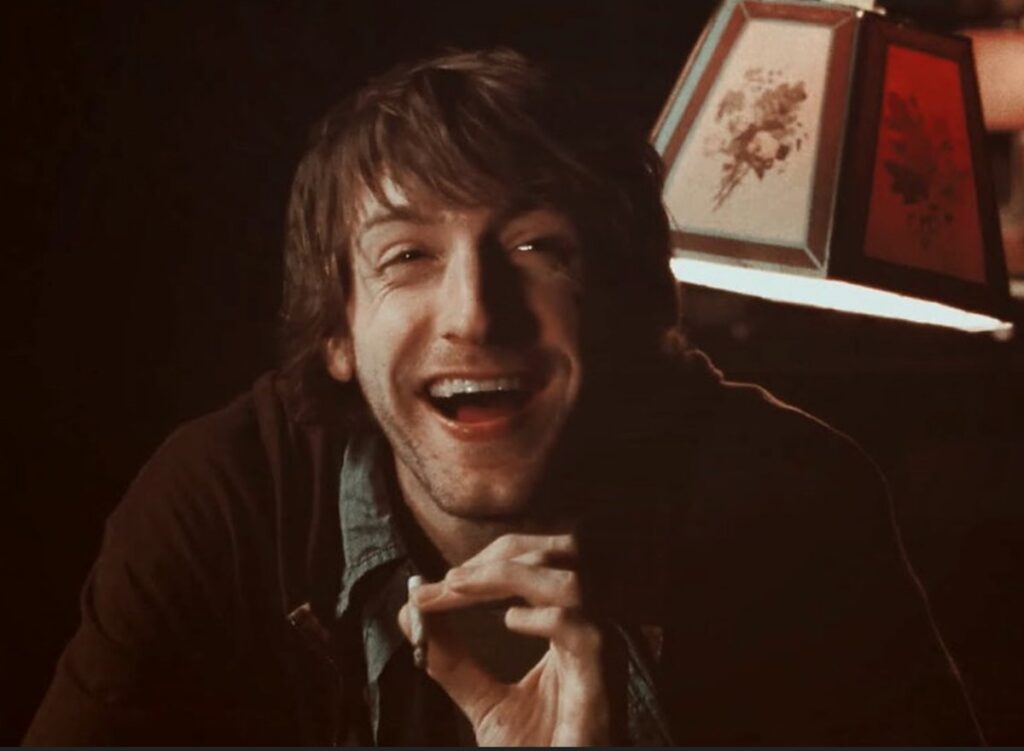
He’s the unserious, funny, stoner-bro. Yet, though Marty is completely baked 99% of the movie, he’s oddly the most sober member of the cast. He’s the one pointing out something is wrong, that things aren’t lining up, and that people he’s been friends with for years are suddenly acting utterly out of character.
Not only does the prophet spot incongruity, he refuses to stop asking, “WHY?”
Marty is the guy looking for the two-way mirrors, who questions the smoke and wires, and ultimately keeps poking at what overall agenda this trickery serves (turning him, ironically, into an unlikely hero).
To add another layer of comedy, The Cabin in the Woods literally makes fun of the canonic role (in story) by deliberately placing WHO to stop the Hero’s Journey? A guy throwing around more more red flags than a CCP parade!
On the way to the cabin in the woods, Marty and friends stop for gas and meet—not kidding—The Harbinger. Not only does the gas station looks like it fell off the set of The Hills Have Eyes, but the gas station attendant might as well have stumbled out of “Slasher Central Casting.”
He does everything short of knifing their tires to make the group turn around.
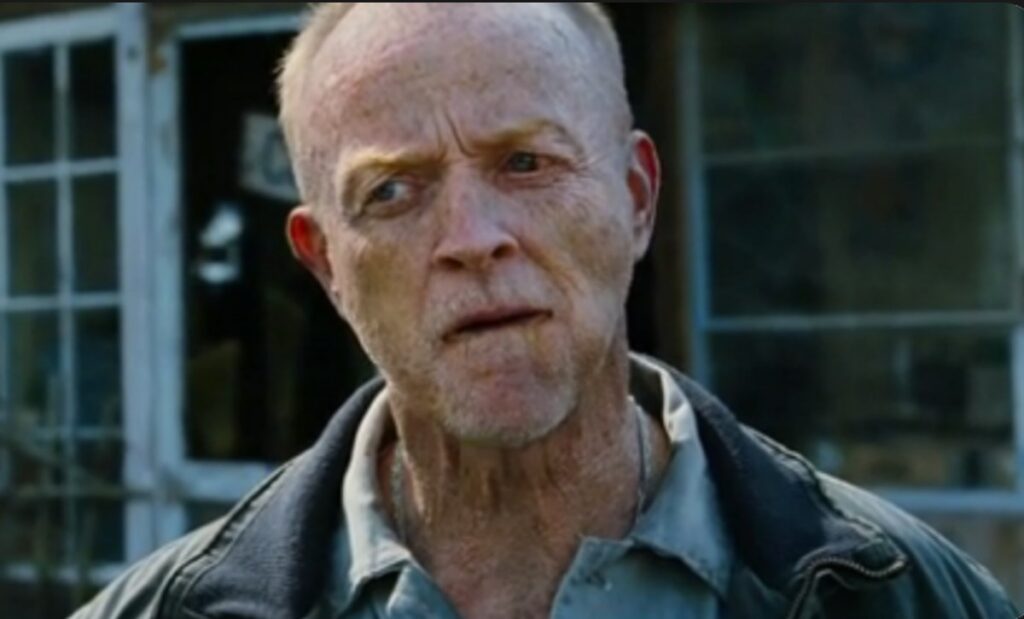
HIS NAME IS “MORDECAI” FOR GOD’S SAKE!
In my opinion, the harbinger is one of the funniest parts of the movie.
But, if you listen to this scene—as funny as it is—take note that The Harbinger acts as almost a nesting doll harbinger. He literally TELLS the guys behind the controls that this time is different and The Fool will be their undoing.
More Misdirection
Another fabulous example would be Cole in The Sixth Sense. Everyone around Cole treats “I see dead people” as pathology, trauma, or a kid’s vivid imagination. In fact, it’s this very mislabeling that generates the entire story. When young Cole draws a man stabbing another man in the neck with a screwdriver, the only logical next step is therapy. Enter in child therapist, Dr. Malcolm Crowe.
Cole isn’t entirely certain of what he’s seeing and, in a desire to fit in, even censors himself.
I draw people with smiles, dogs running, and rainbows. They don’t have meetings about rainbows.
Cole in “The Sixth Sense”
He’s learned—or rather society has taught him—draw what the people like and you get left alone.
Yet, take a closer look, because this movie was so GENIUS it was a trick M. Night Shyamalan was only able to pull off ONCE. When Cole draws violent pictures instead of clouds, this sets the very reasonable audience expectation.
The kid is crazy.
Yet, it is also a masterful set-up for the final misdirection. Cole isn’t crazy. Oh, and his therapist is dead.
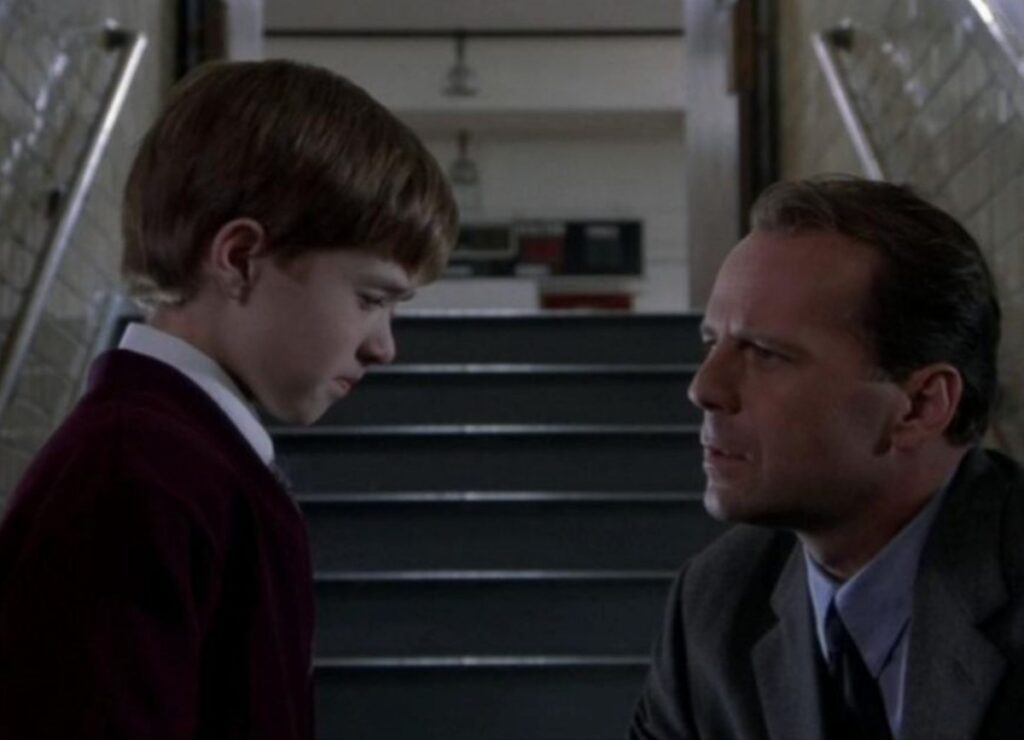
It’s part of the reason millions of viewers were all gobsmacked with the ending. All along Cole keeps repeating, “I see dead people,” yet, because of the lack of trust and the built-in suspicion he’s an unreliable narrator, the audience forgets to look elsewhere.
Like a magician’s sleight-of-hand, Shyamalan hands us the answer in the very beginning. But, the audience is so fixated on Cole possibly being crazy, damaged, haunted, they forget to ask why no one but Cole ever talks directly to Dr. Crowe.
2: Prophets & Dramatic Irony
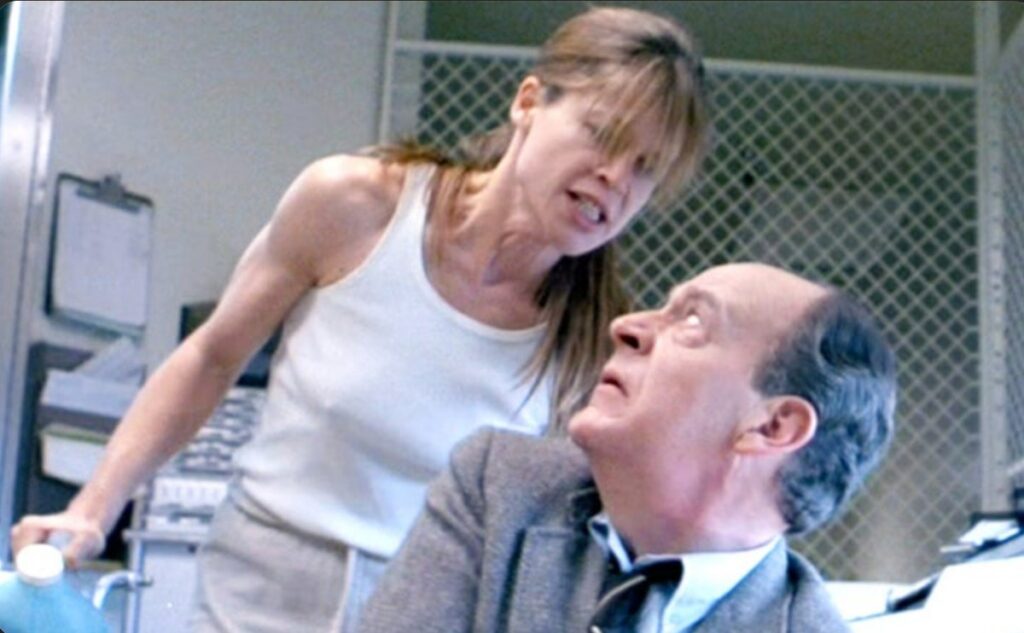
Here is where time-travel movies can slide right in. In this case, the audience knows the prophet is right before the other characters do.
In Terminator 2, we know that Sarah is telling the truth. This means every time a shrink, doctor, therapist, state employee, prison guard, and even her own son dismisses her, we go nuts. Disbelief amplifies the tension because we possess missing evidence.
We met the Terminator in the first movie. Since we know what is in the future—the more authority figures label Sarah a nutcase and silence/impede her mission—the more agitated we become.
The audience knows John’s true future before he does. We also do NOT see Sarah’s behavior as crazy. With the information we possess, it is perfectly logical to move off the grid, hang out with gun runners, and learn to be a one-person army. Okay a two-person army. Sarah believes she can stop SkyNet before it ever even happens. As a failsafe? Train her son, John, to lead the resistance.
John resents his unconventional childhood and is angry at his mother…until he, too, possesses the key information that pivots his paradigm completely.
Prophets Question Fate Versus Free Will
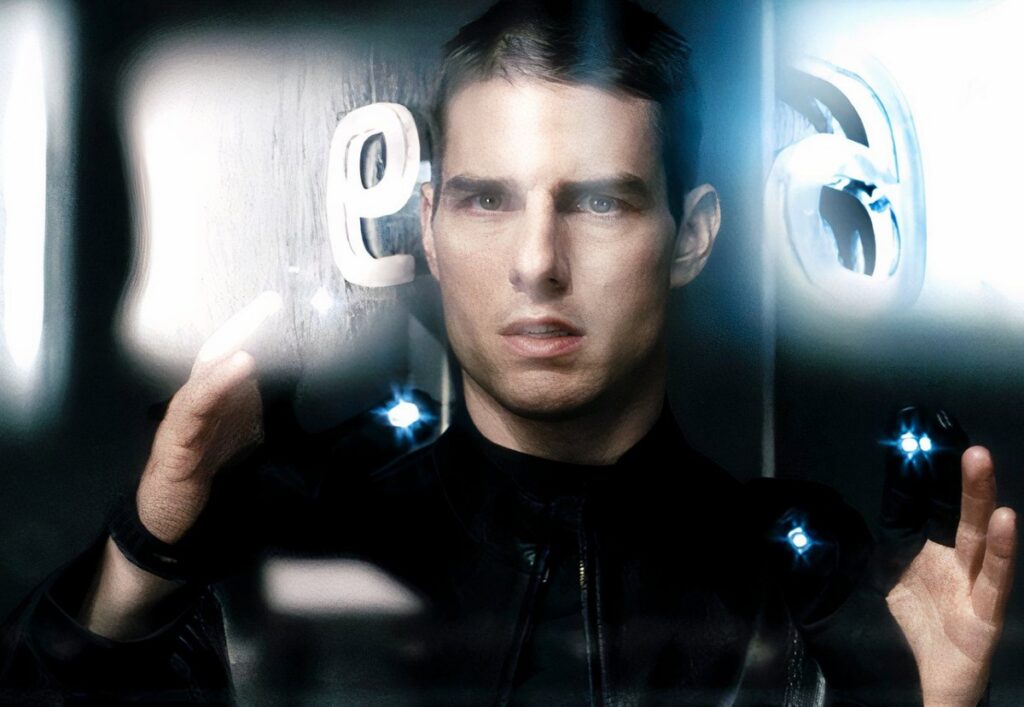
Prophet archetypes are incredibly useful for making audiences dig into those existential questions. Is the future already determined? Do we still have free will? Or is it some mix of both?
Minority Report uses this “in your face” prophesying as the entire story engine with the pre-cognitives—a.k.a. “pre-cogs”—who can literally witness a murder before it happens. The pre-cogs’ have a genetic mutation that gives them the uncanny ability to foresee enough details of a murder before it happens. This harnessed ability creates the foundation for a new agency known as The Pre-Crime Division.
Why can’t they see rape, assault or suicide? Good thing the story, itself, hands us the answer.
There’s nothing more destructive to the metaphysical fabric that binds us than the untimely murder of one human by another.
Dr. Iris Hineman in “Minority Report”
In this world, the pre-cogs serve as biological seismographs to detect the gravest moral catastrophe—murder. Using the three pre-cogs, who float around in a strange gel that enhances their abilities, Pre-Crime has all but eliminated premeditated murder.
The public has gotten the message.
Don’t even THINK about planning a murder or scary guys in tactical gear will come crashing through your skylight and haul you to jail. Crimes of passion? Meh, still working out the gross civil rights violations kinks on that one.
How does it work?
Weaponized Prophets
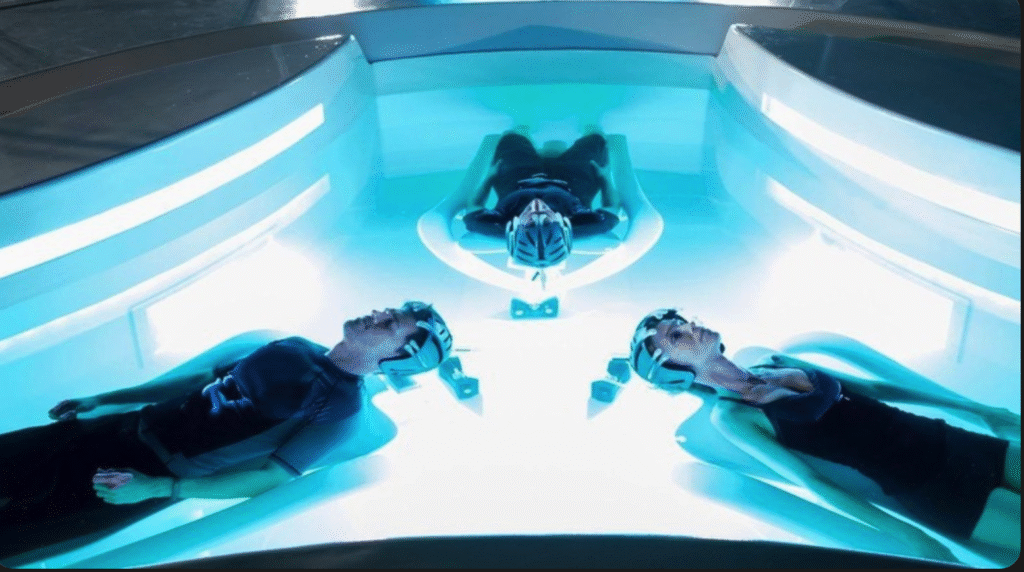
The pre-cogs are the first layer of obvious prophets and set the premise of the story. They sense a murder, their “visions” set off alerts at HQ, then the Pre-Crime police/detectives sort through all the images and filter out the relevant information to stop the murder before it ever happens.
In the beginning of the movie, we see this in action when an unnamed husband catches his wife in bed with another man. After a tense few minutes trying to locate the correct home/identities, Chief John Anderton races to the rescue at the final moment. With only slices of seconds remaining, our “hero” stops Howard Marks (husband) just before he stabs wife and her lover in bed.
Anderton reads Howard Marks his rights, slaps a halo on his head, and then officers cart Howard off to cold storage in “Future Jail.” No real trial or presumption of innocence. Merely a panel of serious-looking judges handing down a slam dunk sentence over pre-Zoom.
Prophets Say…No More Free Will
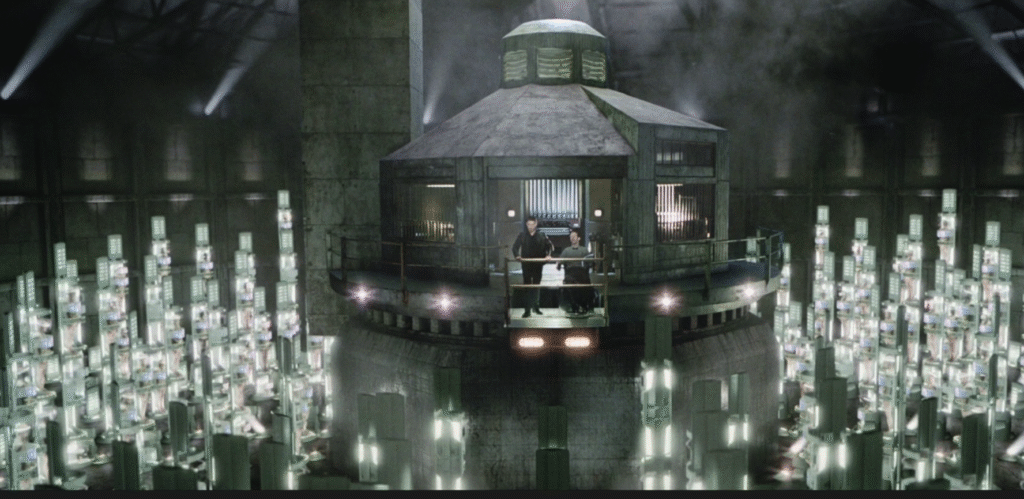
But think of it. There are thousands of regular citizens held in a sort of stasis for decades, serving out sentences for crimes they technically never committed. Who can truly answer whether or not they might have stopped themselves at the last moment?
So glad you asked!
How the story uses the fate vs. free will is when the pre-cogs flag Chief John Anderton—head of Pre-Crime and its strongest advocate—for premeditated murder.
According to his own arguments in the beginning, he cannot escape fate. The prophets saw it, therefore you’re guilty. It’s as immutable of a law as gravity.
Okay, but if he really IS drinking the Pre-Cog Punch and believes Pre-Crime is infallible, then he’d simply accept he is going to murder a man he has never met. Right?
But, since that would be a terrible story and very short movie…he obviously questions the prophets and his own destiny.
What I love about this movie, however, is there are layers of prophets in the story. The Fed who claims there are flaws while Anderton insists the pre-cogs are never wrong. The drug dealer who tells John, “In the land of the blind, the one-eyed man is king.” Dr. Iris Hineman, who left the very program she helped create because of the abuse she “saw” coming.
Every one of these prophets serves a critical role in how the story unfolds and keep us on the edge of our seats. All of these prophets add to the already overwhelming dramatic irony within the story.
3: Prophets Provide the Stakes/Story Clock

In previous, posts, I offered my formula for an excellent story. In my opinion, if any story on any scale loses one of these components…it’s incomplete.
The formula:
Intriguing protagonist + active verb + core story problem (antagonist/Big Boss Troublemaker) + stakes + ticking clock.
As an editor for over two decades, I’ve read thousands of submissions. One of the biggest oopses many new writers make is they fail to set the stakes/add in a clock. Think about it. If there is nothing big to be won or lost by the end, who cares? Yet, a ticking clock is threaded inextricably with the stakes because the characters shouldn’t have forever to make decisions.
Fiction is therapeutic but it is not therapy.
Tick Tock
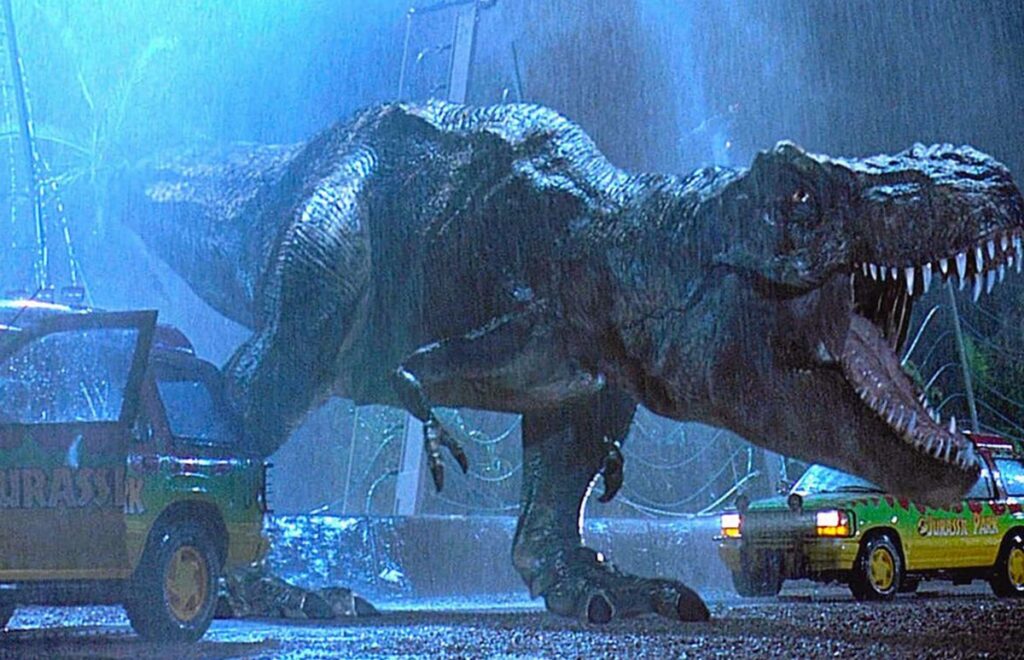
Some of you reading this might be old enough to remember seeing Jurassic Park in the movie theaters. Back in 1993, CGI was still in its relative infancy and not widely used. So trust me, the first time we saw FULL SIZE FRIGGIN’ DINOSAURS on screen? We were just as agog as the visitors touring the park. Some of us were just as unsettled/horrified, too.
We weren’t pre-cogs as much as pre-writers.
John Hammond, eccentric billionaire/visionary businessman/showman genuinely believes he’s created something wondrous for the public. However, after a worker dies, the lawyers and investors force Hammond to fly in a little “credibility committee.”
He needs them to sign off on safety before the park can launch.
The visitors, comprised of a number of experts and family, are all wowed after an initial tour. Minds blown! A park containing actual dinosaurs! What could possibly go WRONG?
After the tour, Dr. Ian Malcolm, mathematician/chaos theorist seems to be the only one in the room with perspective. Though the other scientists appear to have some hesitancy, only Malcolm is having NONE OF IT. He has an absolute fit. He alone is bold enough to point out how spectacularly this little amusement park is poised to fail…inevitably. And with DIRE and world-shattering consequences.
Fun guy at a party, I bet.
Prophets Say What Others Don’t Want to Hear
While everyone else in the group is still rosy from the “We just saw living dinosaurs” afterglow, Dr. Ian Malcolm does not waste any time or mince any words.
This is going to fail because you’re pretending a complex adaptive system can be controlled.
He refuses to sugar coat the reality lurking behind Hammond’s dream.
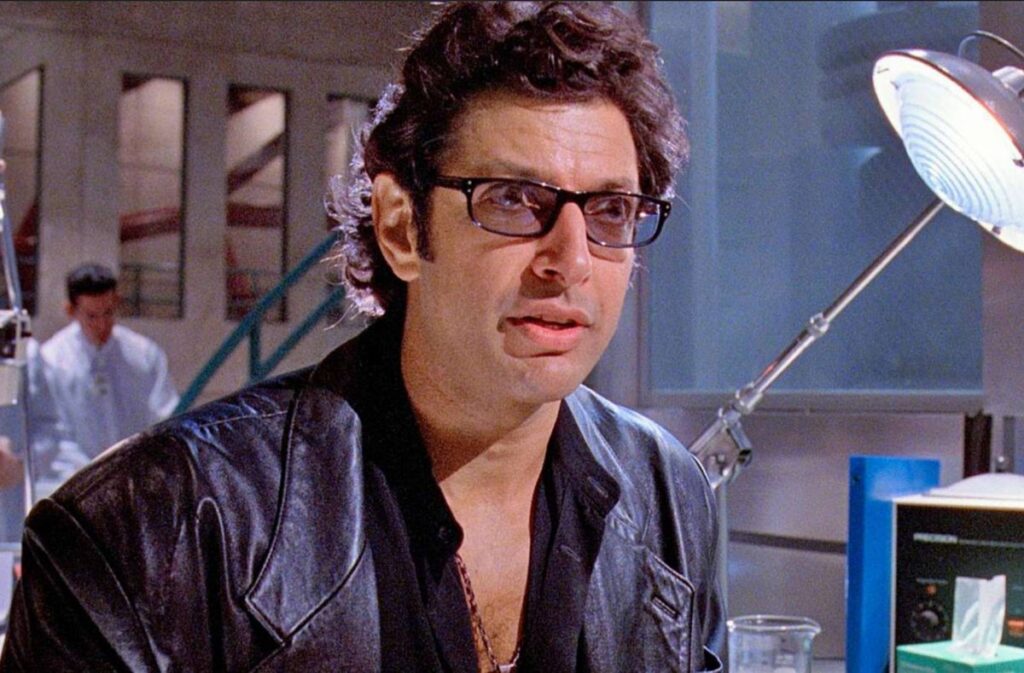
Your scientists were so preoccupied with whether or not they could, they didn’t stop to think if they should.
DR. IAN MALCOLM Jurassic park
Hmmm, sounds like Dr. Iris Hineman, doesn’t it? Or me earning my degree in AI *coughs*. Moving on!
Prophet Says…Only a Matter of Time
Malcolm is unwilling to budge on his position, but sadly for all of them…too late. No one asked HIS opinion before siphoning dinosaur DNA out of amber-trapped primordial mosquitos. As wowed as the audience is, we know something bad is bound to happen.
Ripley in Aliens is a similar prophet, serving almost the identical function. She desperately tries to call out the company on their hubris. She has told the company exactly what happened on the Nostromo and warns them of what a xenomorph is capable of.
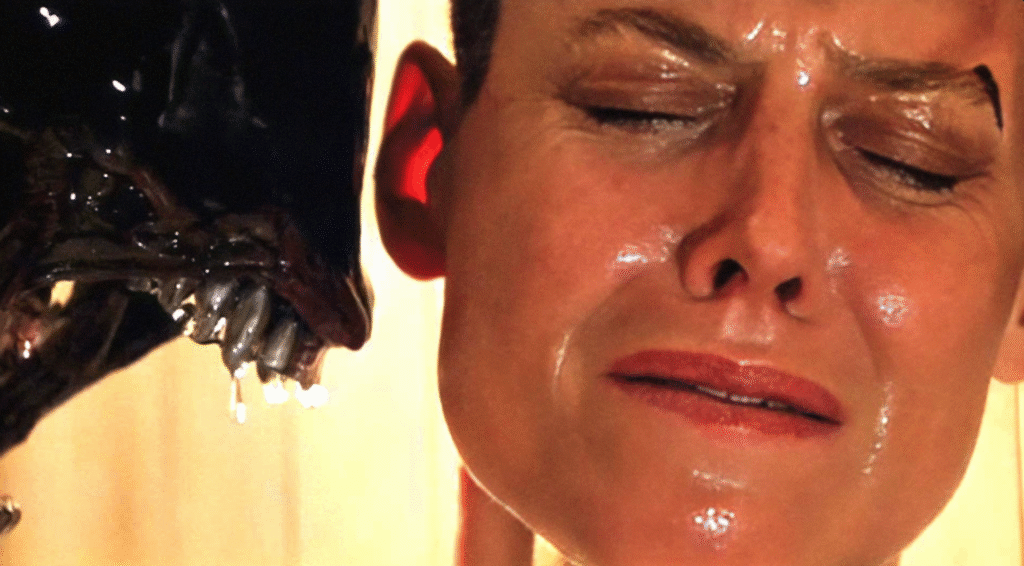
And they totally listen and call it ALL off!
*record screeching*
Yeah, LOL. Um, no.
They treat her like a hysterical, traumatized female who has to be exaggerating and she loses her flight status and credibility. There’s nothing the Space Marines can’t handle.
Sure.
Ripley, as prophet, not only adds stakes and a ticking clock to the one movie, but to the overall trajectory of the company/franchise. As much as she tries to warn them there is literally no way to control xenomorphs and to kill all the creatures and their eggs with fire…she knows (and we know) it’s only a matter of time.
Profits overrule prophets every time.
kristen Lamb (Yes, I am quoting myself so sue me)
No matter the carnage, damage, or evidence, eventually the company (or a subsidiary or offshoot or competitor) is going to screw around with AI xenomorphs and everyone will die.
Sorry, couldn’t resist. Yet, it proves my point.
Everyone LOVES a Prophet…in Hindsight

For the record, a character merely being rejected does not a prophet make. Here are six characteristics this archetype usually exhibits.
Prophets:
- See the pattern early. They recognize the “shape” of a larger picture no one else can see.
- Say what other people don’t want to hear. Their message is usually inconvenient, embarrassing, destabilizing or morally uncomfortable.
- Lack social permission to be believed. Whether they’re a stoner, a nutcase, or a cop accused of murder, something about who they are disrupts the benefit of the doubt society might extend to other people who aren’t “compromised.”
- They warn rather than predict. Prophets usually aren’t there for the ego stroking. They’re not as interested in being told they’re clever or smart as they are in stopping INEVITABLE BAD THING from happening.
- Prophets pay a social cost. They’re often ridiculed, exiled, punished or even killed for refusing to toe the socially acceptable line. It’s easier to attack the messenger than it is to face that the prophet might actually be correct.
- Is vindicated too late. Once the evidence piles up to where everyone can see the CLEAR and OBVIOUS problem, it’s too late. This is why everyone loves a prophet…in hindsight.
Before we close out, I would like to point out something obvious *bada bump snare*. Certain genres are going to be better ecosystems for a full-on “prophet.” Speculative fiction and fantasy are just going to make the woo-woo more plausible.
That said, the prophet function is woven throughout all of fiction.
It just often looks like a disapproving mother, an eccentric aunt, or a visionary teacher who can “see” what others can’t see or refuse to see. Mentors are excellent variations of “the prophet” but so are protagonists who are defying convention. The Wright Brothers looked insane until they actually proved humans could fly.
What Are Your Thoughts on PROPHETS?
Who are some of your favorite prophets in fiction? Have you ever noticed how often the character everyone dismisses as crazy, paranoid, difficult, or ridiculous winds up being the only person asking the right questions?
And as writers, how can we use that character without simply handing them a crystal ball and letting them spoil the ending?
More importantly, when everyone in the story agrees on what is “obviously” true…who is the one character willing to ask, “What if we’re wrong?”






1 comments
Luna Lovegood. Hung out to dry for seeing creatures no one else does. Oh, wait, threstrals *do* actually exist. Alas, Rowling doesn’t do anything with her but make her Crazy Stoner Girl.