
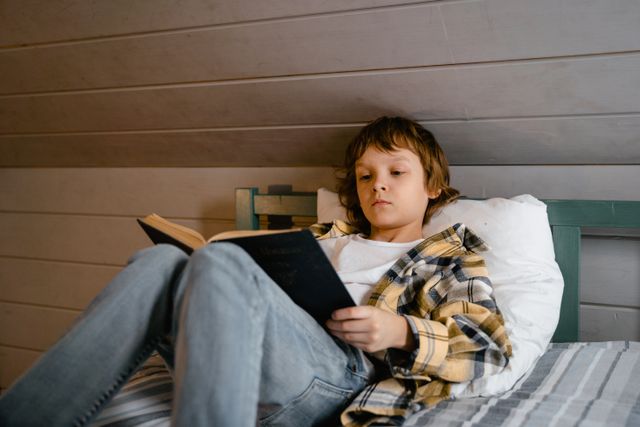
Boys aren’t reading. As a writer and boy mom, the markedly steep decline in male readership over the past two decades didn’t shock me. The response, though? Totally different story.
Wow.
Just…wow.
Sometime over the weekend, The Atlantic dropped this gem: An Underrated Reason Boys Are Reading Less: A lack of male protagonists is making it harder to get young readers into books. Full transparency. I haven’t read the entire article for two reasons. First I am not paying $90 a year for an on-line anything that doesn’t involve plasma grenades and secondly?
No kidding.
The article cites Afoma Umesi’s thoughtful substack post, Do Boys Really Have Enough Books? where Umesi drops some pretty not at all shocking statistics. For instance, female leads outnumber males more than two to one.
Let’s skip to the shocking part (for me).
The reader/writer response simply floored me. I’ve been a professional writer for over twenty years, and fiction authors have an utterly breathtaking failure rate. The odds of becoming a best-selling author/household name are only slightly lower than being mauled by a bear after winning the lottery.
I wish I were being hyperbolic (okay maybe I am being a tad hyperbolic), but this profession is rough.
Believe it or not, writing a work that spans anywhere from 50K to 120K words is already hard. Got it. Yet, when The Atlantic publishes information about reading patterns that writers could genuinely use—as in a GINORMOUS demographic that no one is writing for—what was the response?
Contempt, disdain, mockery, ridicule…you know, exactly what you want to hear from writers looking for readers. Frankly, I was flabbergasted at how many commenters essentially were spouting, “Tough $h!t! Boys could stand to read some romance.”
And I am in no way berating romance, not even a little.
Romance constitutes a lion’s share of the fiction market and is responsible for billions—BILLIONS—in sales every year. Hell, I wish I had the skill to write it. It’s just that anyone who’s met me would think I’d either been kidnapped and replaced by a Pod Person OR that I’d taken up plagiarism.
I just happen to prefer other genres and, at least until a couple days ago, I was under the impression that was okay.
Not everyone had to like the same kind of books. Right. Right?
Reading Rainbow Dogpile
When I initially spotted the article, I was thrilled! Someone was finally talking about a reading gap I’ve been griping about for fifteen years. Yet, as the commentary progressed, something deeply disturbing emerged. The responses ranged from dismissive and smug to just outwardly abusive and misandrist.
There was definitely an atmosphere of “comeuppance.”
After centuries of females having to read male dominated fiction, the boys are merely getting their due!
As if eleven-year-old boys have any say over what’s been published over the past several centuries…or even, today. Apparently there was nothing wrong when eleven-year-old ME wanted more female action heroines, but fast-forward to 2026 and if boys want to be the hero for a change? That’s apparently rage bait.
So let me get this straight. Random House took a risk on repping erotic romance. Due to that effort, Fifty Shades of Grey hit mainstream markets as of March, 2012. By summer of the same year, this title almost single-handedly propelled erotic romance into the mainstream. By early 2014, the trilogy had sold over 100 million copies worldwide.
Okay, to each their own. Not my thing, but I have plenty of friends who enjoy reading and writing the genre. Obviously there was an untapped market (please stop giggling).
Kidding aside, when erotic romance demonstrated enormous commercial potential, a major publisher embraced it, and the market exploded.
Yet, dare to suggest something as obvious as boys might read more if we wrote/published what they’re saying they like? *ducks stones*.
Reading Preferences, Gender & the Sudden Switch
What I find interesting is that, when I was growing up, most successful authors (outside of romance) were men. Ray Bradbury, James Clavell, James Michener, Tom Clancy, Robert Ludlum, Tony Hillerman, Stephen King, Dean Koontz, L. Ron Hubbard, Frank Herbert, and J.R.R. Tolkien were among my greatest literary influences. Their stories were a huge part of why I wanted to become an author.
For some weird reason, it never occurred to me to care if they were men. They told great stories. I, ALSO, wanted to tell great stories!
When I first decided to go pro, most of the market—again, outside of romance—was male-dominated. I’m a female who happens to love action/adventure books. Éowyn was the G.O.A.T. in my eight-year-old brain and remained there up until picking baby names.
***Yes, my son almost inherited a name no one outside of a Comic-Con would be able to spell and I’m not sorry.
I never read The Baby-Sitters Club. Mostly because I was too busy actually baby-sitting so I could snag the next Goosebumps book or latest in David Eddings’ The Belgariad series.
Strangely enough, back in the 80s, most thirteen-year-old girls weren’t toting around a copy of William Gibson’s Neuromancer.
Ask me how I know.
The point of this being that I gravitated to a different kind of story than most of my female classmates. And that was fine because there were plenty of books to feed my imagination. Why do I mention this? Because somewhere at some point, authors and publishers recognized there were girls like me who wanted to be the protagonist in a sci-fi/action/adventure book.
And what did they do?
They wrote stories for those girls…and the market responded favorably.
Think about it. When you write things people want to read, they READ!
I know! I’m just as stunned!
Joking aside, why is responding to girls’ reading preferences a smart business decision, but suggesting we respond to boys’ preferences treated as controversial?
The Overcorrection
Yes, I was a tomboy and definitely preferred action adventure, but that doesn’t mean that was all I read. V.C. Andrews anyone? *flips hair* I read ROMANCE (um, okay it was closer to “incest” but I’m Gen X and we just prefer to call it “complicated”).
Whether it was Anne Rice’s ambiguously gay vampires or Dragonlance’s emotionally abusive/unavailable Raistlin, I had plenty of romance (and later, therapy). What can I say? I was morbid, dark and edgy before it was cool.
There was just something about the saccharine sweet books catering to girls of my generation that rang false. I couldn’t relate to the perky popular cheerleader as much as I could relate to a gothic tale of a jacked up family hiding generational trauma.
***I liked poetry, too.
Suffice to say that I LOVED it when female protagonists who were brave, tough and edgy started going more mainstream. I very much enjoyed The Hunger Games and Divergent series. Girls finally had options when it came to the protagonist.
Yet, somewhere along the way, the boys got left behind. This isn’t me claiming this; the statistics are showing this.
Reading Doesn’t Need to Be a Zero-Sum Game

Publishing, in the early 2000s, corrected and started offering a wider variety of female protagonists. Female authors finally broke into traditionally male genres (J.D. Robb, anyone?).
Is it wonderful that there are more female adventure books? Of course! Do I love that women can write more than just romance? Absolutely.
But why does it have to be at the expense of male adventure books? Short answer: It doesn’t.
If we were dealing with a pre-digital paradigm, maybe I could see some logic in the pushback. Only so much physical shelf space. Got it. But, in the digital age, with arguably infinite shelf-space, what’s the problem?
Writers need readers. There’s a massively overlooked demographic–>readers need writers.
No one claimed we needed to delete all the strong-female books or that male audiences have no use for strong females when that’s demonstrably false (uh, men LOVED Ellen Ripley, Sarah Connor, Éowyn, Red Sonja, and more!).
We merely suggested letting the boys have options, too. Considering I’ve homeschooled my son for the past decade, I can attest that boys are definitely an underserved audience.
And railing that boys can read Hemingway or The Hardy Boys rather misses the point. So we didn’t need Katniss because girls could read Jane Eyre? I’m hoping the absurdity is obvious.
The notion that one group can only be empowered at the expense of another is not only toxic, it’s short-sighted. If we want boys to grow into compassionate, kind, brave, noble men, they might benefit from some role models. Humans use mirroring to learn.
Not to mention humans learn empathy when we have to inhabit an unfamiliar POV.
In short, everyone can benefit from great role models and from experiencing the world through eyes other than our own. Case in point, in Oliver Twist, Charles Dickens put readers inside the experiences of a neglected orphan and exposed the cruelty of Britain’s workhouse system.
With Black Beauty (told from the horse’s POV) readers experienced cruelty, exhaustion, fear, and kindness through an animal’s eyes. The novel helped change attitudes toward animals and inspired animal advocacy groups.
Upton Sinclair’s The Jungle highlighted human exploitation and horrific working conditions in Chicago’s meatpacking industry…aaaand everyone was so horrified what was going in the sausage we got the FDA. Still a win *shrugs*
I aimed at the public’s heart, and by accident I hit it in the stomach.
Upton Sinclair
Y’all get the gist. If men can benefit from a female POV, then females can benefit from being in a male’s. This is not hard.
Serve the Reader What They WANT
Years ago, when I was speaking at Thrillerfest in NYC, we went to dinner at a fancy Australian-Asian fusion restaurant. The chef (owner) had won Iron Chef and it was a big deal to get reservations there. Since I had some pretty serious food allergies, I called ahead of time to make sure the restaurant could accommodate so I didn’t make their lives difficult. The hostess assured me I’d be fine. Plenty of meat and veggies.
We walk miles to get to the place, wait for an hour to eat, and I try to order the steak just without the mashed potatoes (had dairy). Multiple times the waitress returned to my table and recommended the parsnip soup.
After at least four times trying to order a steak, I asked what the problem was. Wanna know the answer? I am NOT joking.
The chef said that, “…removing the potatoes would ruin the aesthetic balance of the plate.”
To which I told my server that if anyone offered me parsnip soup one more time, I was going to ruin the aesthetic balance of a CHEF. For the record, that restaurant was no longer in business the next year when I returned. Shocking! I know.
Which brings me back to where we started.
Boys aren’t reading. We have an entire generation of young men who are increasingly disconnected from books, and writers are being handed an opportunity to do something about it.
Instead of celebrating the possibility of bringing millions of new readers into the fold, we’re arguing over whether those readers deserve stories they’ll enjoy.
Seriously?
Books aren’t participation trophies. Reading shouldn’t be punishment for historical grievances, and eleven-year-old boys aren’t responsible for centuries of publishing decisions.
Girls deserve stories that inspire them. Boys deserve stories that inspire them. And every child deserves the chance to discover that magical moment when a book makes the rest of the world disappear.
We don’t need fewer heroines.
We need more heroes. And more readers.
More boy heroes won’t “ruin the aesthetic balance” of fiction. It will keep writers in business…which is more than I can say for snotty chef-restaurateurs.
What Are Your Thoughts?
Do you read more than ONE genre? Growing up, what books made you fall in love with reading? Did you care whether the protagonist was male or female, or were you simply looking for a great story?
If you’re raising boys (or teaching them), what books have captured their imaginations? What kinds of stories would you love to see more of?
***Personally I LOVE, LOVE, LOVE Jonathan Maberry’s Rot N Ruin series. Ironically, I’d already read the series before using it for Spawn’s homeschooling. Maberry does a phenomenal job of writing a horror adventure book with wonderful, noble male characters and strong females.
Have you ever struggled to find books that appealed to your or your child’s particular tastes? What genres or types of stories do you think publishers overlook?
Toss out your thoughts! Suggestions! Love hearing them!





1 comments
What I have to say is, “OMG. I thinnk many of us knew the publishing market didn’t actually care about boys, but they said it out loud.” Thank you for sharing this. I also won’t be subscribing to The Atlantic for a number of reasons, but I will share this article. And I will consider writing more for boys. Thank you, Kristen.