

In the modern age when everyone can use AI to produce at least passable work, mastery is more critical than it’s ever been. AI has largely eradicated typos and poor grammar that used to signal inexperience which has some benefits. Those who struggle with spelling or grammar aren’t as far behind the Eight Ball as they used to be. You can now dig into storytelling mastery, even if spelling is your nemesis.
*waves to the dyslexic folks*
Side Note: I love how everyone seems positively giddy when a writer makes a typo on-line. Um, sir, we are writers, not Spelling Bee Champions *adjusts dictionary on desk*
Thus, if spelling makes you bonkers and grammar trips you up, AI definitely can be a game changer that redirects where you focus your mastery efforts. NO ONE is getting to the end of a book, giddy from reading delight saying, “There wasn’t a single misspelled word! Oh, the use of semi-colons was breath-taking.”
But, don’t get too excited.
AI Can’t Fake True Mastery

While AI can fake competence, it cannot manufacture/replicate writing skills only learned through study and practice. Therein lies the danger.
Without the normal roadblocks rookies of old used to tangle with, AI can be confidently WRONG and mislead new writers that their skills are far more polished than they really are.
A quick story to illustrate.
In our family, we absolutely FORBADE any of the children from using water wings or floaties. We insisted on teaching everyone to swim—at least dog-paddle—while still in diapers. Why? Because floaties could give a young child a false confidence that could get them killed.
They wouldn’t learn to respect the water and would have no idea that it was really the foam in their Little Mermaid/Spiderman swimsuit doing the hard work, not them. And that was a good way to have a child confidently dive into the deep end without the requisite skills to survive it.
Similarly, AI can land writers into a deep end they don’t have the mastery to navigate, which begs the next obvious question: How do writers achieve mastery?
Many folks claim it’s practice, but I disagree.
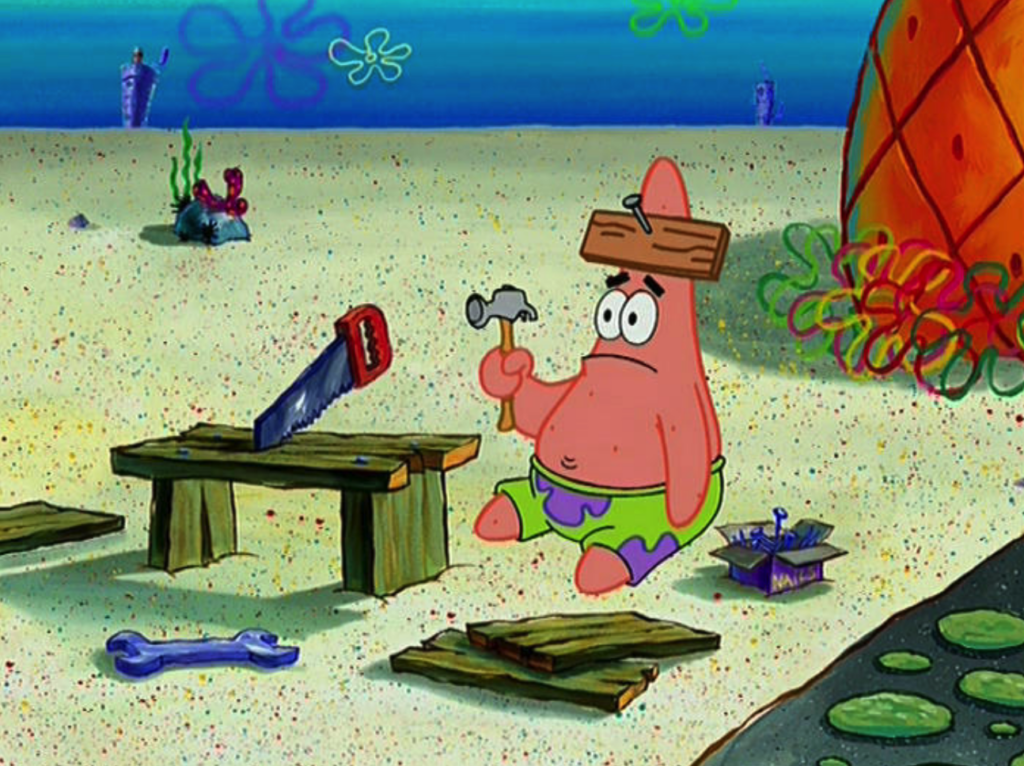
We hear it in kitschy writing slogans all the time. Like this one.
What do you call a writer who never stops writing? Published.
Kristen Circa 2002
Yeah, no.
If there’s no correcting what we are doing wrong, then we’re simply practicing and ingraining bad form. Learning to survive being tossed in the water is a long way from being an excellent swimmer.
***Last I checked, no one is eagerly awaiting the Dog-Paddling heats in the Summer Olympics.
If you learn to swim the butterfly, that’s awesome…unless you have bad form. You could swim five miles a day and are far more likely to end up with wrecked shoulders and blown discs than you are to be a contender for the GOLD.
Practice doesn’t necessarily make perfect. Practice makes permanent.
Give Yourselves Permission to Be NEW
Before we cover the five mistakes that reveal a lack of mastery, I want to make something clear. Every great writer started out dog-paddling as a rookie. Writers, like Olympians, don’t just magically launch into greatness solely off natural talent, so PLEASE! Give yourself permission to be NEW. In fact, I promise if you stay at this long enough, you’d MISS the early days (like childhood), so enjoy the feeling.
The Writer’s Journey: From Total Newbie to the Joy of Mastery
On Writing: Why Mastery Should Matter to Authors
Now that we’ve come this far, what are common oopses that either fail to hook readers or just lose them completely? While audiences might not be writing coaches, humans possess an innate sense of what makes a good story. While they might not be able to articulate WHY they put down a book, that doesn’t mean they didn’t have good reasons to slip in that bookmark. Of course, “Um, I just didn’t like it” is not exactly helpful, which is why we are all here today.
So what exactly is it that coaches editors, such as myself see that immediately flags weak writing?
Mastery Habit One: Ditch Excessive Stage Direction

Stage direction often reveals a writer who hasn’t learned to distinguish movement from meaningful action. A character turning, nodding, reaching, or looking isn’t inherently a problem. The issue is whether those actions accomplish anything other than coaching readers on the obvious.
She turned and reached in the back seat for the gun.
I would certainly HOPE SO! The thought of her NOT turning to reach in a car’s back seat is nightmare fuel.
Similarly, trust that we readers understand how everyday actions are accomplished.
She opened the cabinet to grab another glass.
Well, unless she’s one of the missing X-Men, I’d certainly hope so. Yet notice how this stage direction differs greatly if we write this, instead:
She flung open the cabinet for another glass.
Here, the character isn’t opening a cabinet because we, the reader, have thus far been mystified as to how fresh glasses are accessed. The verb flung implies a distinctive mood: anger, frustration, resentment. Additionally, using the word another suggests subtext. Is she angry that her sister showed up unannounced in the middle of an intimate date? Has her mother showed up to dissect her failing marriage and she’s struggling to be hospitable?
Notice how the action has shifted from stage direction to dramatic action.
Additionally, while punctuation and italics can be used to coach readers in free internet blogs…I’d advise against punctuation prompting in your fiction.
Ellipses are wonderful, just don’t get crazy. Feel free to use an exclamation point now and again, just don’t add “she yelled” as a tag. Instead of an exclamation point, though, see if you can strengthen the dialogue so you don’t need to signal the reader more than a flightline worker on the deck of an aircraft carrier.
Trust me. We not only understand the physics of obtaining a glass, we are also aware what the exclamation point is for.
Mastery Habit Two: Nix Needless Modifiers

If we look at the above example, the verb flung is doing some pretty excellent dramatic work. Notice, however, the other word that immediately implied a story without belaboring exactly how one reaches glassware…another.
Another is doing a lot of work for such an unremarkable word. Nobody would ordinarily single it out as a powerful storytelling tool. Yet in context, it suggests repetition, an additional person, or an escalating situation without explaining any of them. In fact, the not explaining is precisely why a reader is likely to keep reading.
We are all human and humans are notorious rubberneckers. We’re nosy, so use that to your storytelling advantage.
Modifiers come in all forms, but adverbs seem to spark the most controversy.
Some purists claim we should never use adverbs, but I disagree. We demonstrate mastery when we know precisely when to use one and when not to. My advice here is, again, to avoid explaining the obvious.
He whispered quietly.
The verb whisper already tells us the quiet part out loud because it’s inherent in the verb and is vastly different from someone whispering menacingly, seductively, or conspiratorially.
We “get” that, unless expressly told otherwise, characters yell loudly, run quickly or stab someone violently.
As opposed to the ‘non-violent’ stabbing?
But take note:
- Another creates a question.
- Quietly answers a question nobody asked.
- Menacingly introduces information that changes the meaning of the action.
A modifier should contribute something the reader couldn’t already reasonably infer.
Mastery Habit Three: Avoid Low-Hanging Description

This is another place my writing advice might differ from other experts. Description is part of authorial voice and is a matter of taste.
No one is going to mistake Flannery O’Connor for Ernest Hemingway because they have very different descriptive styles, which is great! Not all readers enjoy the same kinds of stories. In fact, audiences will often divide along this line in particular: readers who can’t get enough of rich, immersive description and those who have no taste prefer lean, austere prose.
KIDDING! Mostly.
Hemingway could accomplish remarkable things with restraint. O’Connor could use rich, often grotesque detail to reveal character, culture, and moral conflict. Neither approach is inherently superior.
Yet, if we’re discussing mastery then I’d like to point out the large elephant in the room.
See what I did there?
Seriously, if we choose to use description, remember true masters are wordsmiths. In fact it’s our wordsmithery (it’s a word) that intrigues many readers who enjoy this style. Thus, whether you choose to use a little description or a lot, do better than any average person trying to write the same scene.
Emerald eyes? Fire red hair? Ivory skin?
That kind of description is only slightly better than a bad police sketch.
Mastery Habit Four: Sometimes Less is MORE

Now let’s look at the flip side. While sparse description isn’t necessarily amateur writing, elaborate description isn’t automatically mastery. Trust me, I love rich, evocative vocabulary more than most people. Yes, I dog-ear and highlight books when I find an adjective or turn of phrase that gives me a thrill I want to revisit (and possibly probably steal).
And no wailing from the bibliophiles! I can dog-ear, write notes in or color an entire novel with a pink highlighter if I want to. I bought it. Frankly, as an author, I can think of no greater compliment than a reader marking up my book so much they need to buy a second pristine copy…for show.
Be aware that we don’t have to describe everything. In fact, when we describe everything, we can risk describing nothing. As a die-hard logophile, this is my weakness even after 20 years writing professionally.
For instance, there is likely no one who loves the word cerulean as much as I do, but it doesn’t exactly tell the reader much just on its own. Sometimes blue eyes are just blue eyes and using cerulean is just (clumsily) showing off.
Years ago, I judged a writing contest and GOD BLESS the writer who chose “amethyst bicycle”!
Yeah, Girl, it’s okay. You can just use purple.
Mastery Habit Five: Understanding Selectivity and Brevity Aren’t the Same Thing

And knowing the difference is what demonstrates mastery. True skill is understanding when and how to deploy lush or sparse description, a talent that only comes with a TON of reading and even MORE practice WRITING.
When a writer chooses to linger over a description or uses a uniquely evocative word, that attention ought to earn its place. Let’s use my favorite word here again….cerulean.
She stared into his cerulean eyes.
She stared into his cerulean eyes, but couldn’t quite reconcile how their innocent brightness—the color of baby showers and summer skies—so skillfully camouflaged just how monstrous he could be.
***Yes, it’s wordy. Hey, give me a break. I’m writing examples in a teaching blog, not hoping for a Pulitzer.
Yet, notice how, in the first sentence, cerulean is merely a fancy-schmancy way of describing eye color.
In the second, the contrast between innocent brightness and monstrous behavior gives the description a purpose. The imagery creates dramatic irony and tells us something about the character beyond his appearance.
And the baby showers and summer skies are particularly interesting because they’re not simply prettier alternatives to blue. They’re associations that establish the innocence we’re contrasting with his monstrosity.
The reader innately understands that the POV character is struggling to reconcile the man’s appearance with what she knows about him. That makes the description part of her experience rather than an author stopping the action to admire somebody’s eyeballs.
And yeah, yeah, I get it. Habits Three, Four, and Five are closely related, but notice how each way of using description is doing a different job.
One addresses originality, another restraint, and the last judgment.
Mastery is More Than a Checklist
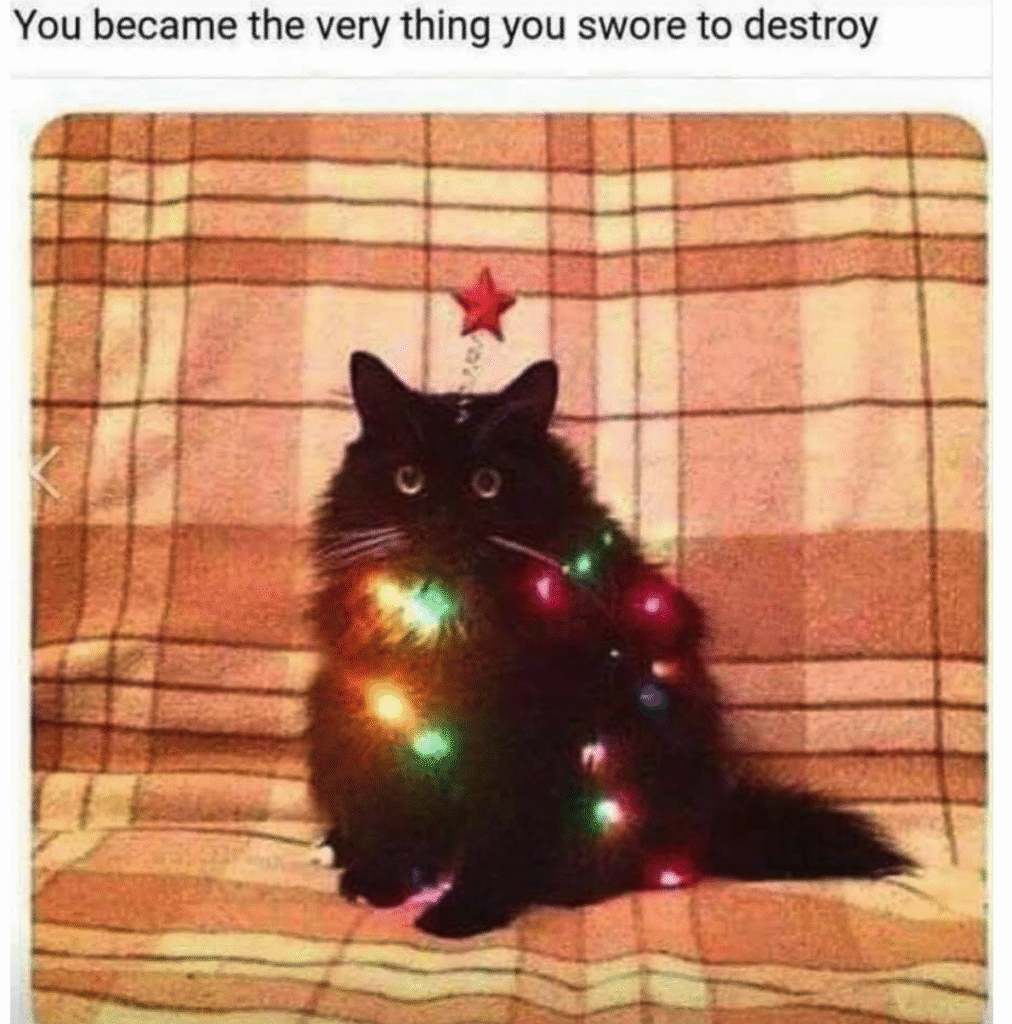
I hope you enjoyed these tips, because I strive to take my own advice. It’s low-hanging fruit to lecture writers to ditch all adverbs and never choose a fancy word when a plain one will do. But doesn’t that strip all the fun out of writing? The JOY out of reading?
Many writers began as readers and we loved being immersed in fictional words so much, we decided to become authors…then promptly water-boarded potential readers with metaphors.
This is where practice, reading, getting excellent feedback can all help us ditch the writing water wings and strike out across the open cerulean sea.
Shut it. Don’t judge me 😛 .
What are Your Thoughts?
Still wearing writing water wings? No worries, chuck them off and just paddle along the edge. Hopefully, today’s list might help you “see” some of the simple bad habits that could be getting in your way.
When was the last time you fell in love with a word or turn of phrase? Did you find a way to make it your own?
Are you describing what matters, or simply everything you can see? Where might a little restraint make your prose more powerful?





2 comments
Greetings from Tulsa, says a former DFW Writer’s Workshop member. Love your posts. The information is always relevant and timely. I’m on my eighth novel, writing the old fashion way. But, I must mention, you have never seen my clever use and abundant insertion of semi-colons. They are truly inspiring.
I LOVE this! I tend to break the ‘rules’ because I think most are ridiculous. I’ll use an adverb if I want! Writing is a creative process and rules don’t always work. I’m not a fan of AI. It’s good for memes which I never do because then I have to learn that. I used to follow you on Facebook which I dumped a couple years ago so I’m glad I’ve caught up with you again. Keep this stuff coming and thanks!