

Fear is, in all likelihood, the single most complex human emotion. Our fears can keep us up at night, but they can also be the only thing that keeps us alive. They can save us, strangle us, liberate us or even destroy us. Like fire, fear can be intoxicating and even addictive and for sound reasons.
We understand on some primal level we NEED fear—that fear DOES keep us alive and often safe. Fear keeps us within society’s guidelines, since most of us (wisely) are afraid of prison.
We check food expiration dates, pay our taxes, and avoid accepting loans from anyone with ‘THE’ as a middle name, (Vinnie the Fish, Marty the Clown, Jimmy the Snake etc.).
Fear is to thank for many of these sound decisions.
Alas, fear can also be the ‘tame’ tiger who’s our best cuddle buddy for ten years…until it tries to eat our face off. Ask Siegfried and Roy. Thus, fear’s dichotomous and volatile nature can’t help but draw us in like those proverbial (and suicidal) moths to the flame.
A few years back, I wrote a post about how shame is the beating heart of great fiction. But if shame is the heart, what is the BLOOD? The life force of truly magnificent stories?
My POV? Fear.
Fear IS Fiction
Some folks reading this might have a knee-jerk response of, ‘Oh, I don’t like horror.’ Yet, I want to point out ALL genres hinge on fear. What is a good romance without the fear of never being loved, never finding love, or finding then losing love?
Fear is what adds the breathless expectation, the race to the end turning pages as quickly as we can because we are AFRAID the couple we’re rooting for won’t get their act together before it’s too late.
Whether an MC is overthrowing an evil wizard, stopping a drug cartel, or opening that cupcake shop despite all her family’s nasty barbs and undermining, FEAR is the lifeblood that gives the story LIFE. The larger the fear (and more universal) the more resonant the story.
A Fearful Genre
All fiction has its place. Some fiction is purely fun and escape, and the world needs more fun and feel-good. Certain books are simply a holodeck. These stories allow us a safe space to get away.
Many books offer mental respite from the mundanities of life, a haven where we can regroup after dealing with the overwhelming pressures of being an adult (kids, laundry, bills, car repairs).
These stories serve as a place of rest and we all could use more of that!
But that isn’t all fiction.
Many writers (myself included) desire to go far deeper with our fiction, explore wounds and human issues. We’re compelled to poke and prod at larger social dilemmas.
Stories offer a mechanism where we can ‘safely’ expose that which is diseased and ALSO show these cultural cancers can be eradicated.
Speculative fiction is an excellent outlet for easing our anxiety and that of the reader’s. It’s a genre that is still pretty hot due to a plethora of factors including but not limited to: artificial intelligence, geopolitical threats, global media, living in a surveillance society, loss of privacy, government intrusion, and Facebook.
Oh, my bad META *rolls eyes*
Then, there’s the constant exposure to every variety of threat (terrorism, politics, pestilence, artificial intelligence, robot girlfriends, Alexa, Siri, Amazon Prime, global warming, and…whatever the hell a Labubu is supposed to be *shudders*).
I know writers are told not to write for the market, which is partial advice. Horror (and speculative fiction) historically ebbs and flows in how popular it is. Usually, when times are tense? Believe it or not, people want MORE.
Horror and Humans
Stephen King did a great job explaining the purposes of ‘horror’ in Danse Macabre and he made an observation I will never forget. Horror usually reflects what society is collectively worried about/can’t deal with.
In the 19th century, books like Frankenstein or The Island of Dr. Moreau reflected how emerging science and technology impacted our humanity. Fast forward to the 1940s and 50s and you see a lot of creature features (post developing nuclear technology), alien invasions (the space race, Sputnik) and even “Pod People” (The Red Scare.)
By the 1970s, horror ended up with a tarnished reputation because the slasher flicks took off with Texas Chainsaw Massacre. Yet, despite me hating slasher fiction, why did that movie resonate?
Because there was nowhere and no time of day that was safe.
Previously, characters had to just survive until dawn or get to a church, then suddenly there was absolutely nothing you could do. Reflective of the Vietnam conflict much? No rules, no clue who might be a combatant, no real objective other than staying ALIVE?
Then in the 70s and 80s we had loads of movies (and books) like The Omen, Rosemary’s Baby, The Exorcist and all this was happening largely in tandem with the Satanic Panic. By the 90s, horror fell out of fashion and tipped into comedy *say “Hello” to the Scary Movie franchise by 2000). Yet, this breather didn’t last long until everything was zombies…right about the time our world was becoming digitally connected and social media was on the rise.
Even Cormac McCarthy’s The Road released in 2006. The entire premise of the story is that somehow humans have irretrievably messed up. BIG. We never get how we did it (*coughs* too many data centers?), but we’ve managed to obliterate every living thing on the planet except, apparently ourselves.
Sounds about right.
So no food. Except Barbara from HR.
Anyway….
The Man and Boy DO have an objective—get to the coast—but the point of the story is less about IF they get there and more about HOW they get there. If they resort to snacking on fellow humans along the way? They have FAILED.
Yet the story begs the question:
How much of our humanity are we willing to relinquish to ‘survive’?
Still a very poignant question.
Fear as Therapy
If you hate these kinds of stories, by all means, avoid them PLEASE. Trust me, I “get” it feels like we have been LIVING this genre for frigging years. But, this genre is always an excellent staple for sound reasons. Speculative fiction (horror is included in this) offers a myriad of ways to help us mere humans face all the stuff we fear the most. It helps us COPE.
Since fear practically saturates every area of our lives, readers are gravitating more and more to books that allow them to put a face to the fear and then kick its metaphorical @$$.
We can’t do much of anything about AI taking over every aspect of life, the thought of another pandemic, or watching people literally turn into zombies before our eyes *watches kid walk into a pole staring at phone*, but we CAN comment on it, expose it, pry it apart and find what our fears say about our humanity.
And, since we DO NOT LIKE feeling powerless, these stories hand us back some form of agency and ease our terrors. Come on, I can’t be the only one who’s dreamed up a story where we rise up against the self-checkout machines.
Okay maybe just me.
What is Speculative Fiction?
Speculative fiction is an umbrella term publishing uses to describe narrative fiction with supernatural or futuristic elements. This includes but is not necessarily limited to fantasy, science fiction, horror, utopian, dystopian, alternate history, apocalyptic fiction, post-apocalyptic fiction.
Basically, all the weird stuff.
(And forgive me because today we are using seriously broad strokes.)
But what makes the difference between the laughable 1950s science fiction matinees and the long-forgotten pulp fiction versus the works of Philip K.Dick?
What makes The Road literature even though it’s a post-apocalyptic novella? Why is Heart-Shaped Box or Wool so deeply disturbing and simultaneously resonant?
Why did star-packed big-budget films like Jupiter Ascending absolutely bomb? Yet Blade Runner is a science fiction staple worthy of being remade…and remade…and, yes, remade again?
*Probably a horror story premise in there. Transformers 75
Plot & FEAR
It’s easy to dismiss speculative fiction as escapist fluff and some of it is. But, when we look to the great speculative fiction, we see the authors are disguising explosive social commentary within narrative so it can be viewed and experienced behind the safety-glass/containment field of story.
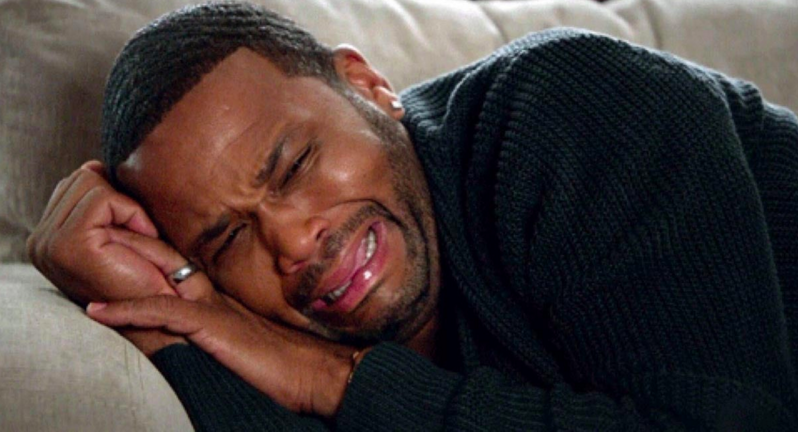
By using story, we writers place the reader into this world then (hopefully) generate empathy that is impossible to create any other way. I’ve seen the movie I, Robot countless times and I bawl EVERY time during this scene.
This is me every….single…time…I watch that scene *BAWLS*
Animal Farm
Was a treatise on socialism and the dangers of groupthink. The peril that comes with handing over too much power to those who claim to have noble and benevolent intentions without asking the hard questions.
Brave New World
Was Huxley’s stab at a culture propelled by temporary highs, unlimited choices and instant gratification while rejecting that which endured—love, family, marriage—because that which lasted required time, sacrifice and work.
He showed us an eerily accurate picture of what society could become if we were not vigilant…and is now probably rolling in his grave.
*Makes note to write story about Huxley haunting Instagram*
Fahrenheit 451
Was an explication on revisionist history, a culture grounded in fleeting emotion and the superficial. How invaluable books are to the bedrock of a society and how important it is that we FEEL uncomfortable. That being UNCOMFORTABLE is vastly important.
It was a warning, I’m afraid, we’ve failed to heed.
We’re living in a society where we can block, delete and take down content because ‘we find it offensive.’ Speakers are being banned from universities. Or, when they show, they’re met with protests and pepper spray simply because they represent opposition.
In far too many instances (for my tastes at least), any disagreement equals hate speech. Universities label books with trigger warnings or pull them altogether so as not to ‘offend’ anyone.
That, my friends, is exactly what happened in the world of Fahrenheit 451. This goal to make everyone ‘comfortable’ directly led to the implosion of libraries and the university and educational system and the creation of the Firemen who burned all the books (because books made people ‘feel bad’).
I’d suggest reading Fahrenheit 451 with its four walls of television and nonstop entertainment. The seashells plugged into everyone’s ears to pump in more entertainment. I’d suggest it, but…*shivers*
…we might already be living it *looks at Apple air pods*
*sobs*
Do Androids Dream of Electric Sheep?
Was Philip K. Dick’s commentary on artificial intelligence and just because we can play God, should we? What sort of moral implications are involved? These are issues we are now facing for real, that are no longer fiction and we are being tasked with the tough questions.
Is it wise to create and sell sex robots that come with a ‘frigid’ setting? What happens when we extend the logic of this? Blade Runner. We get Blade Runner. Also a bizarre escalation/reinvention of the previously mentioned Stepford Wives.
All these great science breakthroughs that float across our newsfeed are now fertile ground for new and possibly even better stories that prod the science with ethical dilemmas.
We (authors) show the world it’s upside down and maybe even ways to right it.
I believe that the great speculative fiction writers have always been the conscience of culture, the voice that whispers things like, ‘Just because we can, doesn’t mean we should.’ Or, ‘This really is a big deal and can go ugly really easily.’
Horror does a lot of that as well. Good horror writers tap into the subconscious angst and give it a face. What happens when society is allowed to continue to devalue human life?
When mobs are handed permission to call the shots? Let’s chat about this after watching The Purge…which ignited enough public frenzy to warrant being made into a USA Network television series.
***Or just hop on TikTok to watch it in real life.
To Make it BIGGER, Make it Smaller
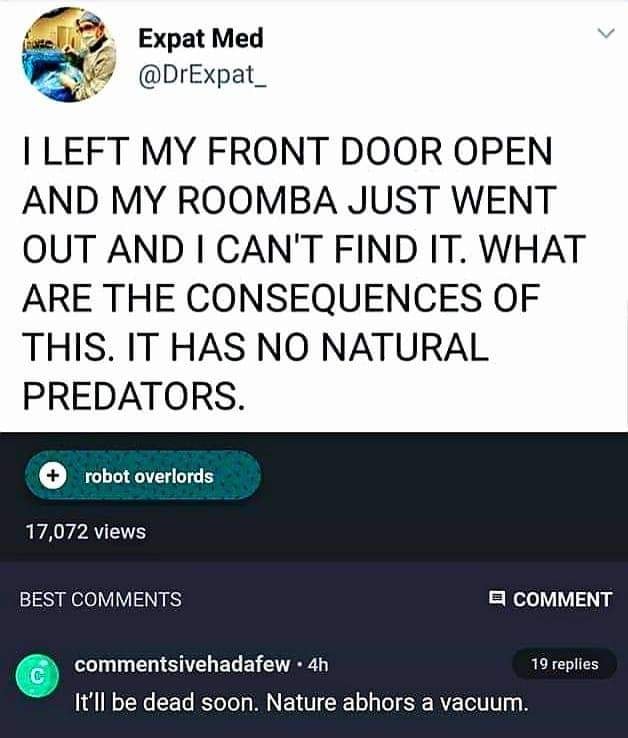
When we care about everything, we care about nothing. Additionally, the human mind can’t truly grasp the loss of a billion lives. It doesn’t resonate because it can’t compute.
Thus the great spec-fic plots make the big small. We tell a small story of one person or a group of people as it plays out on the far larger stage. World War Z anyone?
This is why so many Hollywood movies about asteroids hitting the planet fizzle while The Road simply guts us.
Not All Big Stories are Big
Sometimes speculative fiction isn’t addressing something big, rather it dives into the intimate and deeply personal. Heart-Shaped Box is about a vengeful ghost out to destroy an aging rock star and anyone he loves.
While the supernatural elements are terrifying, what is so beautiful and moving about this story is how the malevolent ghost forces the MCs to face and conquer inner demons they would have been happy to bury…if not running for their lives.
The human story is what elevates this from a forgettable scary book into a work that prods at the deep dark places of the characters (and by extension the reader).
Character & FEAR
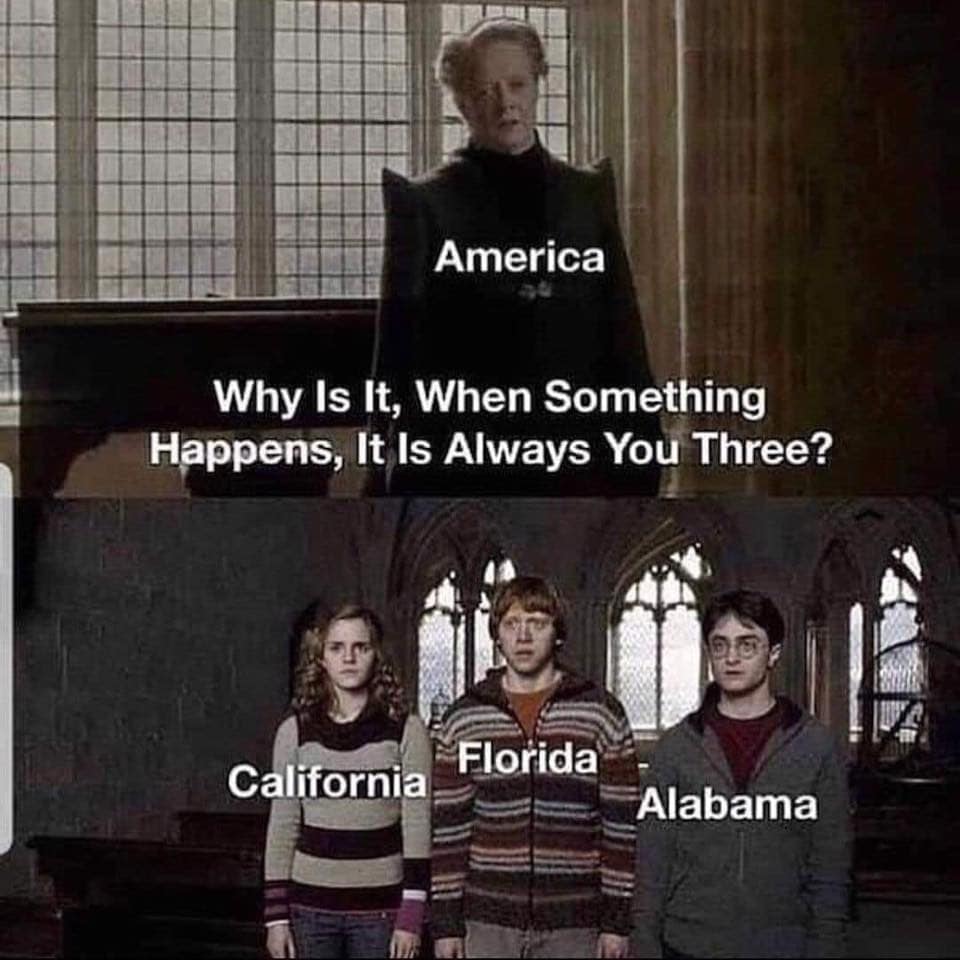
Writing speculative fiction is really tough. It has a lot in common with literary fiction. In FACT, spec-fic in general (INCLUDING HORROR) makes up a very large percentage of what’s viewed as ‘great literature.’ Fahrenheit 451, Brave New World, 1984, Frankenstein, Dracula, The Haunting of Hill House, everything written by Edgar Allan Poe EVER and I could go on.
But won’t 😉 .
Alas, because speculative fiction shares so much familial DNA with literary fiction, it can suffer from similar degenerative diseases. Speculative fiction can easily turn preachy or rely too much on low-hanging fruit that wrecks great stories.
Horror might swing the literal ax too much, the ‘fear factor’ relying too much on shocking an audience that hasn’t been shocked since middle school.
Dystopian, utopian, science fiction, can become an assembly line of derivative drones. In a similar vein, literary fiction can pummel us with pontification, and sedate us with sophistry. Ah, but so can speculative fiction.
*channels Edie Brickell*
Shove me in the shallow water before I get too deep…
World-building is backdrop and can never substitute for story. Yet, too many writers fixate on the element of storytelling at expense of story. Spec-fic is tough. I swear it is the souffle of fiction. If we aren’t careful and look away one second?
Yeah.
Plot of course matters. We need a core story problem to drive the story. Ah, but characters are vastly important and I’d even posit they’re even more important…kind of like literary fiction.
#Hmmmm.
We must develop multi-dimensional characters with flaws and problems to set on this adventure because gizmos, gadgets, spaceships, magic, chainsaws, gore and ghosts, big words and deep thoughts alone are not enough.
Don’t make a bigger asteroid…create a better story.
Story is what is going to rattle the reader’s cage, not the two-ton spider or a warrior alien race like the Klingons but NOT because they’re Cling-Ons—a race of genetically engineered clones grown from needy exes imprisoned on a space colony after violating one too many intergalactic restraining orders…
I take that back.
I’d totally read that story.
Where was I? Yeah. So, more blood or teeth or guts won’t scare us, won’t rattle us, and sure as heck won’t change us.
In a world where we are overwhelmed with doom and gloom, where any debate on-line easily devolves into ranting, I think spec-fic is more important than ever in human history. Story is the place where the armor goes off and the heart is exposed and then able to be changed, fixed, remolded, and softened.
What Are Your Thoughts?
Other than my last two posts gave you GREAT material to draw from? Hey, blogging about the things that scare you helps, too. Sunlight is the great disinfectant.
Do you enjoy scary movies? Dystopian? Science fiction? What are your favorites? Am I the only one who positively loves that the latest horror craze is apparently taking out ‘influencers’? Personally, I was noodling a story where no one’s phone works/connects to social media and they find out the reason they have no signal…IS BECAUSE THEY ARE DEAD.
Did I mention horror can also be FUN?
.




2 comments
Brilliant! Love it.
Fabulous post, Kirsten. I began by thinking, ‘I don’t like horror,’ but then I realised I read and enjoyed many of the books you mention. 1984, Brave New World, Animal Farm, Fahrenheit 451, Dracula, Frankinstein.
Having said that, I realised that I enjoy these books, but not films. Especially those with a supernatural element. I think horror films are just a bit too real for me.